
The collapse of talks between the United States and Iran in Islamabad, after twenty-one hours of negotiations, underscores a recurring pattern in great-power diplomacy: maximalist demands colliding with diminished trust. At the centre of the impasse lies a familiar but unresolved question: can Iran be coerced to forgo nuclear weapons permanently, and also the technical capacity that might enable their rapid acquisition?
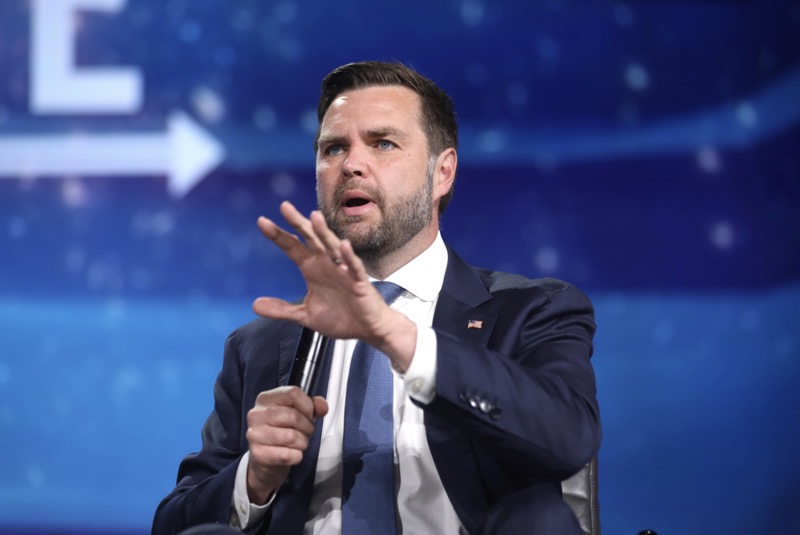
The formulation articulated by J.D. Vance—that Iran must commit to abstention and the abandonment of nuclear capabilities—reflects a long-standing American objective. However, it reveals the gap between declaratory policy and diplomatic feasibility.
The difficulty is not merely technical but historical. Iran’s nuclear posture has evolved in response to cycles of negotiation, agreement and withdrawal. The 2015 Joint Comprehensive Plan of Action, negotiated under Barack Obama, imposed stringent verification mechanisms through the International Atomic Energy Agency and was widely regarded as a functional, if imperfect, constraint on Iran’s nuclear ambitions.
Its subsequent abandonment, in 2018, by Donald Trump eroded the credibility of American commitments in the eyes of Tehran and much of the international community. That legacy now looms over every subsequent negotiation.
In Islamabad, this erosion of trust appears to have been decisive. Reports suggest that, before the war started, Iran indicated a willingness to accept significant constraints in Geneva, potentially including limits on enrichment approaching zero under specific conditions. However, the sequence of events—diplomatic engagement followed closely by military escalation—has hardened Iranian attitudes.
It is not unreasonable, from Tehran’s perspective, to question America’s credibility, especially as prior commitments were not honoured. Diplomacy, after all, rests not only on leverage but also on reciprocity.
The composition of the Iranian delegation further illustrates the complexity. Led by Mohammad Bagher Ghalibaf, a political heavyweight rooted in the Islamic Revolutionary Guard Corps, the delegation embodied institutional continuity. Alongside him was Abbas Araghchi, a seasoned negotiator closely associated with the JCPOA.
Their presence indicated that Iran approached the talks with strategic caution and technical competence. At the same time, external commentary—particularly speculation about preferred leadership outcomes in Tehran—risked complicating internal dynamics in ways that foreign actors often underestimate.
Diplomacy conducted under the threat of force introduces further distortions. The security precautions surrounding the Iranian delegation’s travel to Pakistan, including elaborate measures to avoid potential targeting, point to an environment in which negotiation and coercion are occurring simultaneously.
While such conditions are not unprecedented, they tend to narrow the space for compromise. When interlocutors face existential threats, the political cost of perceived capitulation rises sharply.
The choice of Islamabad as the venue also merits consideration. Pakistan has sought to position itself as a facilitator in regional and extra-regional diplomacy, leveraging its relationships with both Washington and Beijing.
Its role in convening the talks reflects a recognition by the United States that alternative channels may be necessary when traditional diplomatic frameworks falter. At the same time, Pakistan’s motivations to mediate offer international visibility and potential strategic dividends. However, the narrative that Pakistan’s selection was primarily due to sectarian or demographic factors is unconvincing.
More plausibly, it reflects a convergence of tactical considerations: American willingness to explore unconventional venues, Iranian openness to indirect engagement, and Pakistan’s active diplomatic outreach. That convergence, however, proved insufficient to overcome deeper structural obstacles.
Among those obstacles is the ambiguity surrounding preconditions. Iran entered the talks expecting movement on issues such as the release of frozen assets and de-escalation in related theatres, including Lebanon. The absence of progress on these fronts reinforced a perception that negotiations were asymmetrical—focused primarily on Iranian obligations without corresponding concessions. From Washington’s standpoint, such sequencing may appear logical; from Tehran’s, it reinforces scepticism about the process.
The broader strategic environment further complicates matters. The United States is not negotiating in a vacuum but within a network of relationships and rivalries that shape its options. Benjamin Netanyahu, for instance, has consistently advocated a confrontational approach toward Iran, viewing its nuclear and regional activities as existential threats. Israeli actions, particularly in adjacent theatres, influence the trajectory of U.S.-Iran diplomacy in ways that constrain Washington’s flexibility.
At the same time, other major powers are recalibrating their positions. China and Russia have both found opportunities in the current tensions. For Beijing, deeper engagement with Iran offers strategic and economic advantages, including energy security and geopolitical influence. For Moscow, higher energy prices and increased Western distraction provide tangible benefits. Though these dynamics do not determine outcomes, they shape the incentives of all parties involved.
Economic considerations also weigh heavily on decision-making in Washington. Military escalation in the Gulf region carries immediate and visible costs, from energy price volatility to market instability. Domestic political pressures, including concerns among key constituencies about prolonged conflict, can act as a moderating force. Even administrations inclined toward assertive action must account for these constraints, particularly in an election cycle.
One proposal that has attracted attention is the prospect of maritime enforcement measures in the Strait of Hormuz. The idea of interdicting vessels linked to Iranian tolls reflects an effort to exert economic pressure without direct escalation. However, its practical impact remains uncertain.
The complexities of maritime law, the risks of confrontation with Iranian forces, and the limited scale of affected shipping raise questions about its effectiveness. Symbolic measures can signal resolve, but they rarely substitute for a coherent strategy.
Against this backdrop, the likelihood of an immediate return to large-scale conflict appears improbable, though not negligible. The interplay of deterrence, domestic constraints, and international pressures creates incentives for caution.
However, the absence of a diplomatic breakthrough means that underlying tensions remain unresolved. In such an environment, miscalculation becomes a persistent risk that can materialise even in the absence of deliberate escalation.
The central challenge, therefore, is not simply to resume talks but to redefine their parameters. Effective diplomacy will require a recognition that maximalist positions, however rhetorically satisfying, often prove counterproductive. It will also require an acknowledgement of past decisions and their consequences.
The withdrawal from the JCPOA has had lasting effects on perceptions of American reliability. Rebuilding that credibility will take time and tangible actions.
Equally, Iran faces its own choices. While scepticism toward U.S. intentions is understandable, a strategy based solely on resistance carries costs, including continued economic isolation and the risk of further confrontation. The presence of experienced negotiators such as Araghchi suggests that Tehran remains interested in diplomatic solutions, even if the terms remain contested.
Ultimately, the trajectory of U.S.-Iran relations will be shaped less by any single meeting than by the cumulative effect of decisions taken over time. The Islamabad talks, though unsuccessful, are part of that larger process. They highlight both the persistence of dialogue and its fragility.
For policymakers, the lesson is familiar but often unheeded: diplomacy is not an event but a sustained effort that requires consistency, restraint, and a willingness to engage with uncomfortable realities. The alternative—a cycle of escalation punctuated by inconclusive talks—offers little prospect of durable stability.
Reflecting on the current moment, one is reminded that international politics often oscillates between the desire to shape outcomes and the constraints imposed by history, geography, and human judgment.
The challenge is not to eliminate tensions but to manage them in ways that reduce the risk of catastrophic miscalculation.
Whether the present impasse will give way to renewed engagement or harden into prolonged confrontation remains uncertain.
What is clear is that the costs of failure—measured not only in strategic terms but in human consequences—are too high to ignore. The task before all parties is to move beyond declaratory positions and toward a framework that, while imperfect, offers a credible path to de-escalation.
-30-
Copyright©Madras Courier, All Rights Reserved. You may share using our article tools. Please don't cut articles from madrascourier.com and redistribute by email, post to the web, mobile phone or social media.Please send in your feed back and comments to editor@madrascourier.com