Social movements are preserved not only through their ideology but also through the material culture they leave behind—objects that may seem incidental yet, on closer inspection, reveal the inner life of a cause.
The implements of struggle—the things carried in pockets, hidden in satchels, or handled in moments of urgency—acquire, over time, a density of meaning that outlasts their immediate use. They become historical artefacts, bearing the imprint of those who touched them and narrating stories that official archives often flatten or omit.
In the case of the revolutionary movement against colonial rule in North India, this material world was as varied as it was charged with intention: clothes worn in disguise, bomb shells and pistols assembled in secrecy, bullets counted and recounted, utensils shared in safe houses, and pamphlets printed with urgency and conviction.
To the colonial judicial system, these items appeared merely as “evidence of crime,” marshalled to secure convictions. To read them only in this way, however, is to miss their deeper significance. They register ideology and programme, but also something more intimate: traces of courage and defiance in the face of an empire that sought to render such resistance illegible.
Between 1925 and 1931, a crucial span in the history of anti-colonial militancy in North India, a set of objects emerged that offers a way of tracing the movement not simply as a sequence of events but as an evolving constellation of beliefs and practices. Each object—handled, concealed, deployed, and sometimes surrendered—embodies not only an action but a way of thinking about action: a justification for risk and an awareness of consequence.
Their trajectories intersect to form a material archive that is at once fragmentary and coherent. To follow these objects is to follow the revolutionaries themselves—across train compartments and safe houses, courtrooms and prison cells—and to glimpse how ideas were translated into acts at once symbolic and irrevocably real.
On 9 August 1925, in what has since come to be known as the Kakori train robbery, a group of young members of the Hindustan Republican Association intercepted a train carrying government funds near Kakori, in present-day Uttar Pradesh. The organisation, relatively new, had emerged from growing dissatisfaction with the pace and methods of the mainstream nationalist movement.
Until then, its members had relied on small-scale dacoities to finance their activities, a strategy that proved not only logistically difficult but morally fraught, often setting them against the very people in whose name they claimed to act. Kakori marked a shift in both tactic and symbolism: by targeting government revenue—extracted from Indians and used to sustain colonial rule—the revolutionaries sought to align their means with their ends. The robbery was conceived not merely as a way to secure funds, but as a direct, almost theatrical strike against colonial authority.
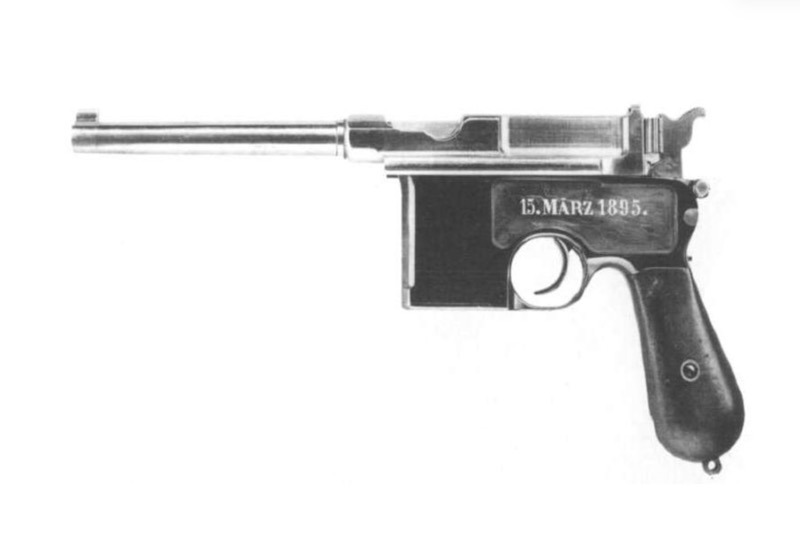
The plan was executed successfully but undone by a moment of contingency that would reverberate far beyond the scene itself. As Ashfaqullah Khan and Ramprasad Bismil struggled to break open the iron safe, a shot rang out—unplanned, unintended, and catastrophic. The weapon was a German-made Mauser C96 pistol, one of the group’s preferred arms.
In the confusion, Ashfaqullah Khan handed it to his comrade Manmathnath Gupta, who accidentally discharged it, killing a passenger who had stepped down from the train. The death transformed the meaning of the action in the eyes of the colonial authorities. What might have been prosecuted as a political crime was reframed as murder, allowing the state to cast the revolutionaries as criminals devoid of restraint. The subsequent trial led to severe sentences: four were executed, several transported for life to the Andaman Cellular Jail, and others given long terms of imprisonment.
In the courtroom, the Mauser pistol was presented as evidence—stripped of context and made to stand in for guilt. Its afterlife suggests a more complicated story. As an artefact, it captures a moment of transition within the movement: a shift toward directly targeting the colonial state and toward greater ideological clarity. It also bears the weight of unintended consequence, reminding us that even carefully planned action remains vulnerable to human error. The Mauser thus records both intention and accident, conviction and risk.
If the Mauser speaks to a collective moment, the pistol associated with Chandrashekhar Azad brings a more personal dimension into focus. Azad’s .32-calibre Colt, which he named Bamtul Bukhara, was not simply an instrument but an extension of his self-conception. Naming it suggests an intimacy that goes beyond utility, investing the object with presence in his daily life.
The gun, known for producing both smoke and bullets, carried a certain theatricality in moments of confrontation. According to contemporary accounts, Azad used it on at least two fatal occasions: after the assassination of J. P. Saunders, when he shot constable Channan Singh to protect his comrades Bhagat Singh and Shivaram Rajguru, and later during his final encounter with British police in Alfred Park in Prayagraj, where he chose to end his own life rather than be captured.
For Azad, the pistol embodied a principle he often articulated: that he would never be taken alive. This resolve was shaped in part by his earlier arrest and punishment during the Non-Cooperation Movement of 1921, an experience that appears to have hardened his commitment to militancy.
His comrades recalled him brandishing the pistol not only in danger but in moments of camaraderie, as a talisman of freedom. In an oft-recounted anecdote, a group of revolutionaries—including Bhagat Singh, Shiv Verma, Rajguru, and Batukeshwar Dutt—speculated playfully about how each might eventually be captured. The imagined scenarios were laced with irony, but when it came to Azad, the tone shifted. Flashing his pistol, he declared that as long as he possessed Bamtul Bukhara, no one would capture him alive. The statement, half jest and half vow, captures how an object could crystallise a personal ethic into something immediate and visible.
The pistol associated with Bhagat Singh, by contrast, has had an elusive trajectory, its whereabouts obscured for decades within state archives. Identified as a .32-calibre automatic Colt with specific serial markings, it became the subject of sustained historical inquiry, notably by the historian Aparna Vaidik, who traced its possible locations through archival research. Building on this work, the journalist Jupinderjit Singh eventually located it in a museum maintained by the Border Security Force in Indore, where it had been preserved without recognition of its significance.
Its journey—from use to obscurity to rediscovery—mirrors the shifting place of revolutionary violence in the broader narrative of India’s struggle for independence.
At the time, the pistol was central to two acts that have become emblematic of the strategy associated with Bhagat Singh and his comrades. In 1928, it was used in the assassination of Saunders in Lahore, intended to avenge the death of Lala Lajpat Rai after protests against the Simon Commission. The following year, on 8 April 1929, Bhagat Singh and Batukeshwar Dutt carried out a markedly different action in the Central Legislative Assembly in Delhi, throwing non-lethal bombs, firing shots into the air, and distributing leaflets while shouting slogans. The aim was not to kill but to be heard—a performance of dissent designed to awaken political consciousness. The pistol thus links distinct modes of action: targeted assassination and symbolic protest, both grounded in a shared critique of colonial rule.
Bhagat Singh’s decision to surrender the pistol at the scene, handing it to a British officer, was itself calculated. It ensured his identification and trial, transforming the weapon from a tool of action into an instrument of testimony. The consequences were severe—he was sentenced to death—but the gesture underscored his willingness to embrace the legal and political implications of his actions.
If the pistols trace a history of action and consequence, the watch associated with Bhagat Singh offers a more connective perspective, linking generations of revolutionaries. Given to him by Sachindranath Sanyal in the early 1920s, its history extends further back to Rash Behari Bose, a key figure in the planned uprising of 1915 linked to the Ghadar movement.
In that earlier moment, the watch served a practical purpose, helping coordinate actions across regions. The failure of the uprising led to arrests and exile, but the object survived, passing from Bose to Sanyal and eventually to Bhagat Singh. In this chain of possession, it becomes more than a timekeeping device—a small, portable archive of revolutionary intent.
Sanyal’s own trajectory—arrest, deportation to the Andamans, release, and later role in founding the Hindustan Republican Association—bridges earlier militancy and the more ideologically articulated movement of the 1920s. His writings, including The Revolutionary and Bandi Jeevan, shaped the thinking of younger activists. Recognising Bhagat Singh’s potential, he helped draw him into a wider network. The watch, in this context, reads as both practical and symbolic: a passing on of responsibility and an invitation into a lineage.
It reappears at another critical moment, when Bhagat Singh, preparing for the Assembly action, entrusted it—along with his boots—to Jaidev Kapoor. Kapoor’s subsequent imprisonment and later role in organising study circles and trade unions extend the object’s life beyond its immediate use. Through these transfers, the watch maps relationships that outlast individual lives, linking figures as diverse as Bose, Sanyal, Bhagat Singh, and Kapoor into a continuum of struggle.
In its quiet ticking, the watch measures not only chronological time but the evolution of ideas: the movement from loosely defined republican nationalism to a more explicit socialist orientation, the shift from conspiratorial action toward engagement with mass politics, and the emergence of secular and atheistic frameworks within revolutionary thought.
Unlike the pistols, which mark moments of rupture and confrontation, the watch suggests continuity and endurance. Taken together—the Mauser of Kakori, Azad’s Bamtul Bukhara, Bhagat Singh’s Colt, and the watch that passed through so many hands—these objects compose a material narrative of the North Indian revolutionary movement. They speak not only of violence and defiance, but also of mentorship, memory, and the ways ideas are carried, transformed, and sustained over time.
-30-
Copyright©Madras Courier, All Rights Reserved. You may share using our article tools. Please don't cut articles from madrascourier.com and redistribute by email, post to the web, mobile phone or social media.Please send in your feed back and comments to editor@madrascourier.com