India’s democracy is undergoing a churn. Since the Bharatiya Janata Party (BJP) came to power in 2014, the country’s political landscape has changed in ways that resist easy explanation. Institutions endure, elections continue, but the character of politics has shifted.
This essay outlines key political developments since 2014, examines two competing ideas of India, and situates the present moment within their ongoing ideological conflict.
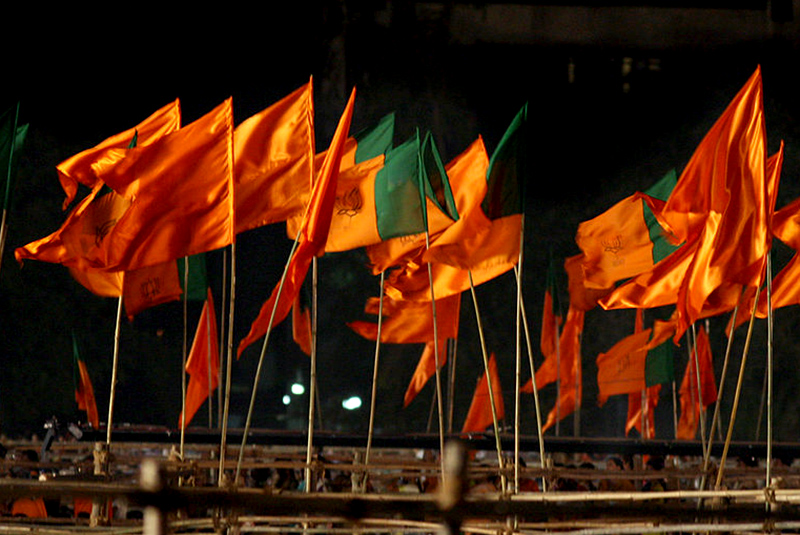
For nearly a decade after 2014, the BJP’s dominance appeared secure. The party’s organisational strength, combined with the popularity of Prime Minister Narendra Modi, left the opposition fragmented and ineffective. It retained its position as the single largest party with a parliamentary majority.
But this pattern shifted in the 2024 general elections. The Bharat Jodo Yatra led by Rahul Gandhi (2022–23) and the emergence of the INDIA Alliance (IA) helped reshape the political terrain. The BJP’s tally fell to 240 seats from 303 in 2019, while the IA secured 234 seats. The outcome altered the composition of Parliament and forced the BJP to form a coalition government under the National Democratic Alliance (NDA), supported by the Telugu Desam Party (TDP) and the Janata Dal (United) (JD(U)).
But this electoral shift has not fundamentally altered the direction of politics. The BJP and its ideological parent, the Rashtriya Swayamsevak Sangh (RSS), continue to pursue their agenda with consistency. They promote Hindu nationalism, suspicion towards religious minorities, and use polarising rhetoric that creates social tension.
At the same time, fringe elements have moved into the mainstream. They denounce Gandhi’s legacy and openly admire Nathuram Godse, the assassin of Mahatma Gandhi. Such developments challenge the secular foundations of India’s freedom struggle. In effect, secularism—based on equal respect for all religions—appears increasingly strained.
In contrast, Vinayak Damodar Savarkar, the principal proponent of ‘Hindutva,’ has gained renewed prominence. Hindutva defines Indian identity centred on “Hinduness.” Savarkar included Hindus, Jains, Sikhs, and Buddhists within this framework but excluded Muslims, Christians, Parsis, and Jews because their sacred geographies lie outside India. As these ideas gain traction, a narrow, divisive conception of nationalism shapes public discourse.
This ideological shift is also visible in the BJP’s engagement with history. It emphasises India’s ancient past while selectively interpreting or downplaying the Mughal and colonial periods. In the digital age, this approach has expanded the scope of post-truth politics. Social media platforms circulate unverified historical claims with little regard for evidence.
Organised political messaging amplifies such narratives, privileging emotional appeal over critical inquiry. The construction of the Ram Temple in Ayodhya—long a central political demand—illustrates the power of symbolic politics, and similar mobilisations around other religious sites may follow.
The artificial aggrandisement of Modi alongside the sustained critique of Jawaharlal Nehru reflects a broader reliance on political messaging rather than deliberation. Cadre-based organisations such as the BJP and RSS emphasise discipline and leadership, leaving limited space for internal debate. This tendency extends to governance. Earlier prime ministers regularly held press conferences and engaged with difficult questions; such practices have disappeared.
The consequences are visible in Parliament. It increasingly functions less as a forum for deliberation. The government often sidelines opposition demands to discuss urgent issues. The suspension of a large number of opposition members enabled the passage of key legislation without adequate debate. Concerns about the Speaker’s impartiality persist, while pressing issues such as unemployment, inflation, air pollution, and electoral reform receive insufficient attention.
India’s constitutional framework rests on a balance among the legislature, executive, and judiciary. That balance has tilted. Power has become increasingly centralised in the executive, particularly in the Prime Minister’s Office. This shift risks weakening institutional checks. It has also created a climate in which citizens may hesitate to voice criticism, fearing labels such as “anti-national.” In such conditions, rational debate becomes difficult.
Post-truth politics further complicates this environment. Public discourse increasingly features unverified claims about historical figures such as Nehru. While a critical evaluation of Nehru’s legacy is necessary, deliberate distortion is deceptive. Nehru’s role in building modern institutions and promoting secularism and scientific temper remains central to India’s political fabric.
Since assuming power, the BJP has also become one of India’s most resource-rich political parties. Electoral bonds—declared unconstitutional by the Supreme Court in February 2024—played a significant role in political funding.
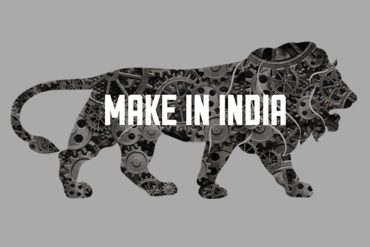
The government’s initiatives, such as Swachh Bharat, Make in India, and start-up promotion, have failed. A large section of the population is dependent on welfare schemes, including the distribution of free food grains, highlighting persistent economic challenges.
At the same time, concerns about institutional integrity persist. Agencies such as the Enforcement Directorate, Central Bureau of Investigation, and Income Tax Department are used selectively against political opponents. Allegations of political defections under pressure and the toppling of elected governments in several states have intensified these concerns. Sections of the media are aligned with the government, limiting space for dissent.
The autonomy of the Election Commission of India has also been questioned, contributing to broader anxieties about electoral fairness. Such claims reflect an erosion of trust. Similarly, concerns about judicial independence have surfaced, notably following the unprecedented public remarks by Supreme Court judges in 2018.
Education presents another area of concern. Like public health, it has long suffered from neglect. Debates over academic freedom, institutional appointments, and curriculum changes reflect wider ideological tensions. Without a commitment to critical inquiry and intellectual diversity, the long-term health of India’s education system remains uncertain.
These developments unfold alongside pressing socio-economic challenges: unemployment, inflation, inequality, environmental degradation, and regional disparities. Issues such as climate change, air pollution, and geopolitical tensions—including China’s activities in Ladakh and Arunachal Pradesh—require sustained attention and serious debate.
India’s diversity—religious, linguistic, and ethnic—remains central to its identity. Federalism depends on recognising and accommodating this diversity. A majoritarian vision centred on a single religion or language risks weakening this foundation. Tensions between state governments and centrally appointed governors highlight the importance of decentralisation.
Since the 2024 general elections, India has entered a more explicit ideological contest between two visions. One, rooted in the freedom struggle and enshrined in the Constitution, emphasises pluralism, secularism, democracy, and federalism. The other promotes Hindu nationalism and seeks a divisive, parochial national identity.
This raises a fundamental question: is India in an interregnum? Antonio Gramsci described interregnum as a period when the old order declines but the new has yet to emerge, producing instability and conflict. That description resonates today. It remains unclear which vision represents continuity and which represents rupture.
India is not merely changing; it is arguing with itself. The legacies of Gandhi and Nehru face sustained challenge, while Savarkar’s ideas gain influence. Historical narratives are being reshaped in a digital, post-truth environment. Power is more centralised, institutions face pressure, and public debate is increasingly constrained.
What has emerged is not a settled order but a prolonged contest. India stands between two ideas of itself—one plural and constitutional, the other majoritarian and parochial. This is the country’s interregnum.
A single election or leader will not decide the outcome. But if institutions endure and if citizens continue to insist on the democratic values that once defined the republic.
-30-
Copyright©Madras Courier, All Rights Reserved. You may share using our article tools. Please don't cut articles from madrascourier.com and redistribute by email, post to the web, mobile phone or social media.Please send in your feed back and comments to editor@madrascourier.com