In February 2003, a month before the Iraq War by a US-led coalition, General Eric Shinseki, then US Chief of Army Staff, delivered a pivotal testimony before the Senate Armed Services Committee. He expressed grave misgivings on the fate of post-Saddam Iraq, stating that hundreds of thousands of soldiers will be required to stabilise the country in the aftermath of the invasion, alluding to a prolonged military engagement and significant US boots on the ground. His trenchant analysis was met with backlash from civilian leadership, especially Paul Wolfowitz, then Deputy Secretary of Defence, who publicly spurned it as “wildly off the mark.”
Eric Shinseki’s prescient remarks would soon be corroborated by history. The world witnessed the catastrophic unravelling of Iraq: more than 4400 US service members killed, wounded almost 32,000, costing almost $1 trillionin direct combat expenditures and almost $3 trillion in long-term obligations – veterans’ care, interest payments, and reconstruction. Moreover, the war caused hundreds of thousands of deaths of Iraqi civilians and security forces, millions displaced, fueled the emergence of ISIS and the unleashing of global terrorism and ongoing military fragmentation. The most disastrous consequence is that Iraqi society lies in tatters. The American forces are still in Iraq, twenty years later, in advisory roles. In the Middle East, wars rarely conclude when they are declared over.
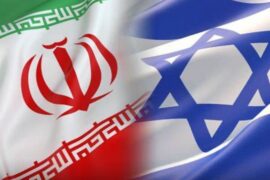
In a striking parallel, recently leaked Pentagon reports indicate that military leaders have cautioned President Trump against pursuing war with Iran, a country four times the size of Iraq and with double its population. The lessons of Iraq, underscored by Shinseki’s warnings and their tragic fulfilment, serve as a sobering reminder. By dismissing expert counsel, the joint US-Israeli operation currently underway, codenamed “Epic Fury,” could potentially lead to prolonged conflict, immense human suffering, and enduring global instability. This is not a preemptive war but a war of choice.
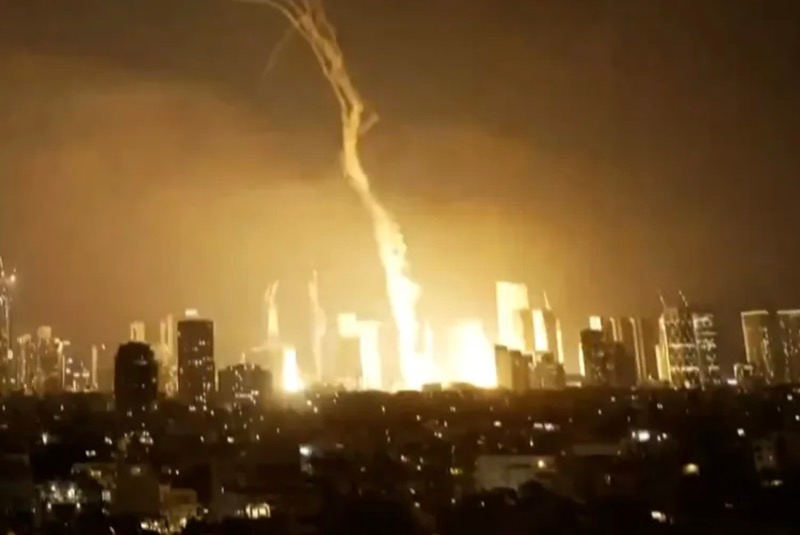
The confirmed death of Iran’s Supreme Leader, Ayatollah Ali Khamenei, marks a seismic turning point in the Islamic Republic’s political order. It isn’t a simple fix to a complex problem. In the immediate aftermath, Iran has reportedly expanded retaliatory actions against U.S. allies in the region, targeting military installations and critical civilian infrastructure such as ports and airports. These incidents have triggered widespread airspace closures and disrupted regional and global travel and trade flows. Whether these strikes remain limited or widen in scope will shape the trajectory of escalation.
A joint U.S.–Israeli campaign under such conditions would not merely be a bilateral confrontation. It would compel Arab states to reassess their security alignments, deterrence strategies, and diplomatic calculations, potentially redrawing the region’s balance of power for years to come.
Former President Ulysses S. Grant once observed that “any course short of national humiliation or national destruction is better than war.” It was a statement not of weakness but of prudence — a recognition that war, once begun, escapes tidy control. However formidable the United States may appear on paper, a conflict with Iran would confront realities that do not yield easily to technological superiority.
The United States’ regional airpower posture is formidable. Advanced platforms— including the F-16, F-15E, F-22, and F-35–operate from bases such as Shaheed Muwaffaq al-Salti in Jordan and Prince Sultan Air Base in Saudi Arabia. Yet geography imposes constraints. Tehran lies approximately 1,034 miles from the Jordanian base and nearly 1,188 miles from Prince Sultan in a straight line. Even before a single weapon is released, the campaign becomes a problem of distance. Those distances translate into operational realities: extended transit times, heavy reliance on aerial refuelling, and repeated exposure over contested airspace. The F-35A’s combat radius—roughly 590 nautical miles in stealth configuration— illustrates the constraint. Aircraft launching from Gulf bases would require tanker support to reach and sustain operations over Tehran. Tankers, in turn, become high-value assets whose vulnerability shapes mission planning.
Stand-off munitions such as the AGM-158B JASSM-ER, with a range of roughly 575 miles and a 1,000-pound warhead, allow strikes from outside Iranian airspace. But stand-off range does not eliminate risk; it redistributes it. Launch platforms must still approach within operational envelopes that intersect with Iranian surveillance systems.
Iran has invested heavily in layered air defenses. Reports indicate the deployment of Chinese-designed YLC-8Blow-band UHF frequency radars, systems engineered to enhance detection of low-observable aircraft and reportedly capable of surveillance ranges approaching 700 kilometres. Even if such systems do not neutralise American stealth advantages, they complicate strike calculus. The objective need not be perfect denial. It needs only increase friction, extend timelines, and raise the cost of sustained operations.
In this context, the question is not whether the United States can strike Iran—U.S. aerospace and naval forces are demonstrably capable of doing so over long distances, combining carrier-based aircraft, long-range missiles, and precision-strike assets. What is far less certain is whether an aerospace and maritime power structured for projection and decisive blows is well-suited to sustain a prolonged war of attrition against a dispersed, resilient adversary like Iran.
Iran has recently upgraded its hypersonic missile capability with the Fattah-2, which can reach speeds up to Mach 15. This missile can carry a 200-kilogram explosive payload and has an extended range of 1,500 kilometres, significantly enhancing Iran’s ability to deter or respond to aerial incursions.
The SM-6 interceptor, which travels at supersonic Mach 3.5, is part of the United States’ layered missile defence architecture against incoming missile threats such as the Fattah series. However, questions remain about whether current interceptor technology can reliably neutralise hypersonic missiles travelling at Mach 15.
In 2022, General Kenneth McKenzie of the U.S. Central Command revealed that Iran possesses more than 3,000 ballistic missiles, excluding cruise missiles intended for land strikes. It is likely that Iran has replenished its missile stockpiles after expending hundreds during the 12-day war against Israel. Notably, several Iranian missiles penetrated Israel’s Iron Dome, causing significant damage to military and scientific facilities, including the Wiesmann Institute of Science and five IDF military bases.
The threat of further widespread damage led Israeli Prime Minister Benjamin Netanyahu to pursue a ceasefire coordinated with Washington. At the same time, Iran has sought to reduce strategic vulnerabilities by deepening technological ties with China. Reports indicate that Tehran has expanded use of China’s BeiDou satellite navigation system, decreasing reliance on U.S.-controlled GPS signals.
BeiDou’s encrypted military-grade signals are designed to provide resilient positioning, navigation, and timing (PNT) services, potentially enhancing the accuracy and coordination of missile systems, drones, and other military operations. Unlike reliance on civilian GPS signals, which can be degraded, spoofed, or regionally denied during wartime, access to an alternative sovereign navigation system reduces vulnerability to external disruption. In contemporary warfare, control over navigation infrastructure is as strategically significant as control over airspace.
The US-Israel war against Iran is essentially an Israeli war, fundamentally shaped by Israeli interests, with significant influence exerted by the powerful US Jewish lobby, particularly organisations such as AIPAC. This lobby has played a prominent role in shaping American foreign policy in the region, advocating for positions that align closely with Israel’s objectives.
During President Trump’s second term, his political campaign received substantial financial backing from the billionaire Zionist lobby. Despite his public assertions of being a “President of peace,”—already attacked seven countries since taking oath— Trump’s capacity to negotiate a pacifist stance was limited by the expectations and influence of his Zionist supporters. This influence was evident during his first term, when he decisively withdrew from the Joint Comprehensive Plan of Action (JCPOA), commonly known as the Iran nuclear deal, that the Obama administration had negotiated. The JCPOA was recognised for its diplomatic prudence and was designed to curtail Iran’s nuclear ambitions by imposing restrictions on uranium enrichment intended for weapons-grade nuclear warheads.
During a joint appearance in Washington, Israeli Prime Minister Benjamin Netanyahu referred to President Trumpas “the greatest friend Israel has ever had in the White House.” In reality, Trump probably is the first US president to be subjected to such pronounced control by Israeli leadership, marking a significant shift in the dynamic between the United States and Israel. This nexus has significantly impeded the peace process in the Middle East and West Asia. The declaration of war against Iran by Trump reiterated the age-old propaganda that Iran is a threat to American sovereignty and its citizens. Anyone who dares criticise Israel’s policies and corresponding US endorsement is labelled as anti-Semitic. The definition of anti-Semitism has a new connotation; it refers to anyone Israel hates, regardless of the substance of their criticism.
The last time a U.S. president mobilised broad public backing for a major military offensive was in the run-up to the Iraq War. Framing Saddam Hussein’s alleged weapons of mass destruction as a direct threat to American security, President George W. Bush secured roughly 74 per cent public support for military action. Today, the landscape is markedly different. Recent polling shows only about 21 per cent of Americans favour initiating military action against Iran, reflecting a profound shift in public tolerance for large-scale interventions in the Middle East. By sanctioning strikes on Iran, ignoring public will, has Trump effectively subordinated “America First” principles to an “Israel First” agenda?
The Iranian regime has repeatedly signalled its intentions for negotiations despite accusations of nuclear ambitions. However, the recent unauthorised strike against a sovereign nation violates international law signed by both the United States and Israel. It’s appalling that the discussion has shifted from non-proliferation to regime change, highlighting the hypocrisy in international relations. If there is no regime change, what would be the definition of success? Notably, Israel, which possesses nuclear weapons but has not signed the Nuclear Non-Proliferation Treaty (NPT), exemplifies the selective enforcement and double standards prevalent in global nuclear governance.
The strikes occurred amid ongoing diplomatic engagement. The latest round of talks concluded on 26 February 2025, in Geneva under Omani mediation, with officials describing “significant progress” and scheduling further technical discussions in Vienna. Against that backdrop, demands that Iran abandon its ballistic missile program, forgo even civilian uranium enrichment, and sever regional alliances are viewed in Tehran as infringements on sovereign defence prerogatives. Whether such conditions are negotiable or coercive lies at the heart of the present impasse.
Predictably, Iran has expanded retaliatory strikes against U.S. military installations and allied targets across the region, including actions directed at Israel. The trajectory of these exchanges raises the risk of drawing in additional maritime and aerial assets, such as US aircraft carriers, in the Persian Gulf, the Arabian Sea, and the eastern Mediterranean.
As confrontation widens, the most consequential arena may not be purely military but geoeconomic. The Strait of Hormuz—through which roughly a fifth of global petroleum shipments transit—remains the world’s most geostrategic and sensitive energy chokepoint. If Iran closes it or even causes limited disruption of shipping, or credible threats to maritime traffic, it could send energy markets into volatility, driving insurance costs higher and destabilising supply chains far beyond the Gulf. A prolonged conflict would reverberate across global trade networks. Major powers with significant economic ties to Iran, including China and Russia, would be forced to recalibrate their strategic posture. A protracted war, in effect, will be the US waging war against its own global supply chains.
While world leaders were quick to applaud the preemptive strikes of US-Israel to start an uncertain war with perilous consequences, the muted response to the reportedly killing of more than 100 children in an elementary school bombing by US-Israeli airstrikes denotes the moral depravity of the global leadership while engaging in diplomacy of convenience.
The Iranian regime is inarguably dictatorial, entrenched in the global psyche by a mix of reality, Western propaganda and lies. And to think of a military solution to the Iranian conundrum is far-fetched, perhaps nonexistent. This may provide further impetus for other Arab nations to acquire nuclear deterrence. But the most ominous evolution of the current crisis is that self-proclaimed democracies are increasingly regressing into dictatorial regimes, indistinguishable from the dictators they condemn. In the Middle East, the side that fires the first strike seldom shapes the final outcome.
The Russian poet Mikhail Lermontov poignantly summarises the perceived mindless aggression and perennial temptations in geopolitics in his poem “The Sail.”
He, in his madness, prays for storms and dreams that storms will bring him peace.
-30-
Copyright©Madras Courier, All Rights Reserved. You may share using our article tools. Please don't cut articles from madrascourier.com and redistribute by email, post to the web, mobile phone or social media.Please send in your feed back and comments to [email protected]