The Price Of Dissent: Detentions, Censorship, And The Decline Of Free Speech In India

Dissent-Repression-Madras_Courier
Representational image: Public domain
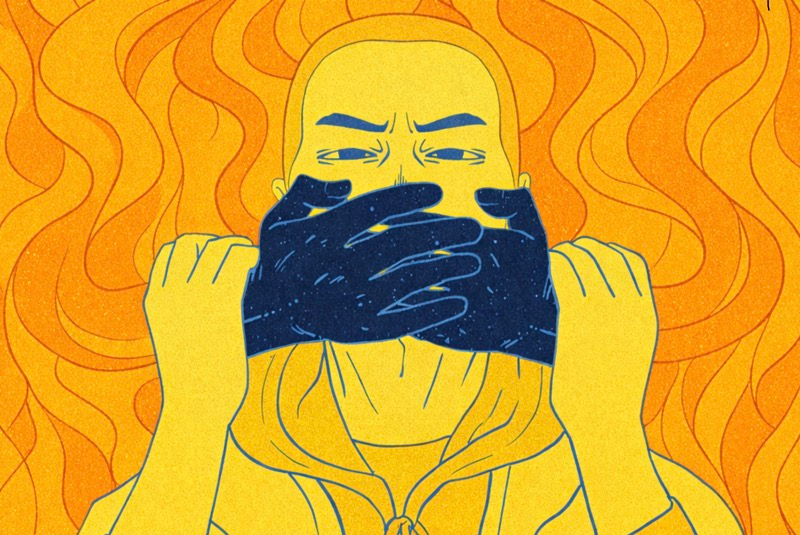
Recent incidents highlight growing state repression that curb dissent and threaten India's fundamental freedoms of expression.

In recent weeks, Mumbai has become a focal point for three disturbing incidents that have raised serious concerns about the state of freedom of expression, cultural autonomy, and the erosion of constitutional values in India. Each of these events, though separate, is connected by a troubling pattern: the systematic suppression of dissenting voices and a growing intolerance toward criticism of the government.

Dr. Sangram Patil, a London-based British citizen, medical doctor, and YouTuber, has long been known for his outspoken critiques of the BJP and its leadership. On January 10, 2026, Patil, originally from Jalgaon in Maharashtra, arrived in Mumbai with his wife, only to be detained by the Mumbai police.

The reason for the detention stemmed from a complaint filed by Nikhil Bhamre, a functionary of the BJP’s media cell, who alleged that Patil’s social media posts had criticised the Prime Minister and other senior party leaders. In response, an FIR was registered against Patil, accusing him of spreading misinformation and inciting social discord under Section 353(2) of the Bharatiya Nyaya Sanhita (BNS).

Despite having no evidence of criminal activity or violence, Patil and his wife were questioned by the police. On January 19, when the couple attempted to return to London, they were stopped at the airport once more. The reason given was the issuance of a Look Out Circular (LOC) against Patil, preventing his departure from the country. Patil later revealed that he had cooperated fully with the police investigation and had formally requested the cancellation of the LOC, but his right to travel remained restricted.

In another incident, the Kalaghoda Arts Festival, one of Mumbai’s most prestigious cultural events, found itself embroiled in controversy. On 4 January 2026, the organisers of the festival were forced to cancel a scheduled book discussion on Dr. Anand Teltumbde’s The Cell and the Soul: A Prison Memoir.

Teltumbde, a renowned Marxist thinker, had been invited to discuss his work, which critically examines the systematic dismantling of the Indian Constitution. The event, titled Incarcerated: Tales from Behind Bars, was to feature Teltumbde alongside journalist Neeta Kolhatkar, moderated by Scroll editor Naresh Fernandes.

However, the event was abruptly cancelled after organisers said they received an “oral directive” from the Mumbai Police. Despite having shared the full festival schedule with the police in advance, the organisers were told to withdraw the session and remove all promotional materials, including social media posts.

The cancellation of an academic event on such flimsy grounds under the pretext of “security concerns” is a blatant example of state interference in cultural and intellectual spaces. It highlights the growing political pressure exerted on democratic institutions that, in theory, should safeguard free expression rather than stifle it.

The third incident occurred at Mumbai University, where veteran actor and cultural icon Naseeruddin Shah was scheduled to participate in an event organised by the university’s Urdu Department. On the night of January 31, Shah was informed that he was no longer needed for the event scheduled for the following day.

The reasons for the cancellation were contradictory; at times, “security concerns” were cited, and at other moments, it was falsely claimed that Shah had voluntarily withdrawn. Shah, however, categorically denied these claims, stating that he received no valid explanation for the cancellation and that he was informed of the decision only at the last minute.

This incident points to a deeper, more troubling trend: the growing intolerance toward minority cultural expressions, particularly the Urdu language, and the erosion of academic autonomy. Shah, a longtime critic of India’s political climate, viewed this incident as part of a broader pattern of silencing dissenting voices. He publicly lamented the disinvitation, adding that it was an example of how institutions were increasingly prioritising political compliance over integrity.

For Shah, the disinvitation was symbolic of a broader atmosphere in which dissent is no longer tolerated. His comments echoed the growing despair among many in India as they witnessed the erosion of freedoms once considered the cornerstones of democracy.

He compared the current political climate to the dystopian world of George Orwell’s 1984, warning that the expectation of unquestioning loyalty to the “great leader” is rapidly becoming a litmus test for political and social participation. In his reflections, Shah pointed out the many contradictions in India’s justice system and governance—how student activists are jailed for years without trial, while those convicted of heinous crimes often walk free.

He expressed alarm at the normalisation of hatred toward minorities and the rewriting of history, including the distortion of scientific facts to fit a political narrative. Shah’s concerns highlight the growing culture of fear that pervades public discourse, where speaking out against the government could lead to professional and personal consequences.

Taken together, these three incidents are not merely isolated cases but part of a larger pattern of political repression. From Dr. Patil’s detention and the cancellation of cultural events to the disinvitation of a prominent actor, these actions reflect a broader trend of state-sponsored intimidation aimed at silencing voices of dissent.

The justification for these measures—whether it be vague claims of “security concerns” or unfounded accusations of social disharmony—appears increasingly flimsy. What is clear, however, is that these actions are part of an orchestrated effort to suppress criticism of the government and undermine democratic discourse.

The chilling effect on free speech is already evident. Writers, artists, and intellectuals—those who should be the custodians of free thought—are finding it increasingly difficult to speak their truth without fear of retribution. The silence imposed on these voices is not just a matter of individual loss but of a broader societal decline, as the very space for democratic debate narrows. When institutions like universities and cultural festivals capitulate to political pressure, the integrity of the democratic process itself is compromised.

If India is to preserve its democratic ideals, there is an urgent need to protect the freedoms of expression that have long been the bedrock of its political culture. These rights are not privileges granted by the state, but constitutional promises fought for and defended by generations of citizens. The responsibility to safeguard these freedoms lies not only with writers, artists, and intellectuals but with every citizen who believes in the fundamental principles of democracy.

The demand is clear: the FIR against Dr Patil must be withdrawn, the Look Out Circular cancelled, and the misuse of state machinery against those exercising their right to free expression must end. Across India, citizens and activists are rising up, calling for an end to political repression and for the affirmation of democracy and intellectual freedom.

Collective resistance—through literature, art, and critical thought—remains the most potent tool we have against the forces seeking to silence dissent. If democracy is to survive, it is incumbent upon all of us to stand firmly against these growing attempts to curtail free expression.

-30-

Copyright©Madras Courier, All Rights Reserved. You may share using our article tools. Please don't cut articles from madrascourier.com and redistribute by email, post to the web, mobile phone or social media.
Please send in your feed back and comments to [email protected]

0 replies on “The Price Of Dissent: Detentions, Censorship, And The Decline Of Free Speech In India”