
The Silent Fertility Crisis: Falling Birth Rates And The Future of Collective Society

fertility-madras-courier
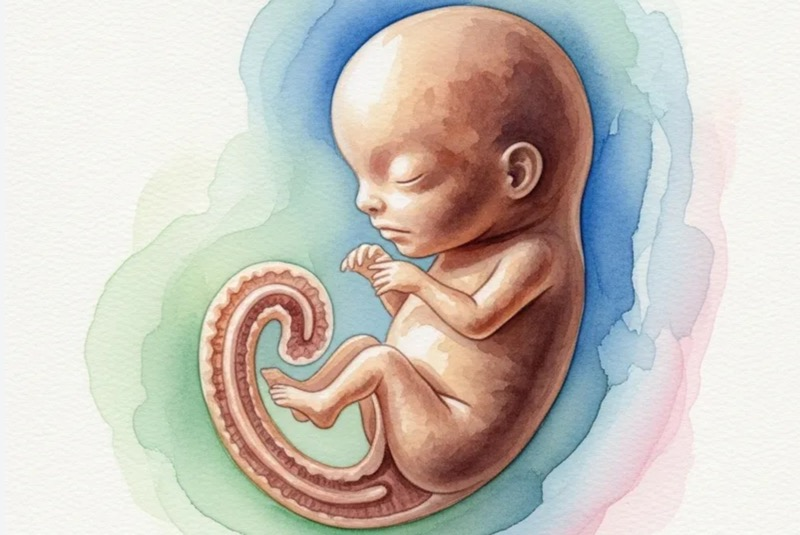
Representational image: digitally generated image.
Safeguarding reproductive rights must include enabling conditions for those who wish to become parents.

At the heart of human existence lies a paradox: reproduction is at once the most personal of choices and the most collective of responsibilities. The decision to have children—whether embraced with joy, approached with trepidation, or deferred indefinitely—is embedded not only in private lives but in the social, economic, and moral architecture of human societies.

Yet in the last half-century, global fertility rates have fallen dramatically. Research published in Fertility and Sterility suggests that the average global fertility rate has dropped from roughly five births per woman in the 1960s to just over two today. It is projected to continue declining, placing many nations below the replacement threshold needed to sustain stable populations over generations.

This trend raises questions that go beyond economic projections into the realms of human rights, social contracts, and the survival of collective systems that depend on intergenerational renewal. Declining birth rates do not inherently diminish the value of each human life. However, they introduce compounding social risks that merit careful reflection because individual reproductive freedom is a core human right recognised in international frameworks such as the International Covenant on Civil and Political Rights.

That right includes both the decision to have children and the decision not to have them. It presumes that people should not be coerced—whether into parenthood or out of it—by legal mandates or social coercion. At the same time, individual freedom interacts with the broader public interest in sustaining communities, economies, and the systems that enable collective coexistence.

Demographic research shows that when fertility rates fall below roughly 2.1 children per woman, populations begin to shrink unless offset by immigration. In the OECD countries, the average fertility rate has fallen from 3.3 in 1960 to about 1.5 today—well under replacement level.

This pattern is visible across Europe and East Asia, and is increasingly evident in North America, with long-term implications for labour forces, welfare systems, and public finances. Nations witness higher ratios of elderly to working-age people, raising the “dependency ratio,” which indicates how many dependents each working adult supports.

High dependency ratios strain healthcare infrastructure and public services, potentially compelling future generations into heavier economic burdens. These are not just economic abstractions; they reflect a reorganisation of everyday life, from who cares for ageing relatives to how societies invest in education, innovation, and public goods.

The Lancet has projected that by 2100, over 97 per cent of the world’s countries may experience fertility rates too low to sustain their populations without migration or artificially elevated birth rates. This does not necessarily signal a catastrophic collapse of humanity—population projections still anticipate global numbers peaking midcentury—but it does suggest that the historical assumptions of continuous growth and youthful societies no longer hold.

Instead, a “demographically divided” world is emerging: regions where populations are ageing and shrinking juxtaposed with areas still experiencing higher birth rates. The divergence reshapes the global economic landscape and implicates comparative advantages, geopolitical relations, and even cultural exchange.

Why is this important in the context of human rights? Because rights are never exercised in a vacuum. They are embedded in communities, economies, and historical conditions. The right to choose not to have children has been fiercely defended against patriarchal, medical, and state impositions.

Yet, conversely, when this choice becomes the default for large swaths of the population under economic and social pressures, it fosters structural vulnerabilities in future that constrain individuals’ freedom to live in robust, opportunity-rich societies. The Brookings Institution emphasises that while there may be no single “optimal” population size, healthy societies cultivate both human capital and demographic balance, not one at the expense of the other.

Academic exploration of fertility decline also shows that the impact is beyond raw numbers. Studies in demographic journals demonstrate how fertility transitions interplay with education, labour markets, and institutional support systems. For instance, when fertility falls sharply, societies must invest differently in human capital to sustain productivity and innovation.

Yet this investment does not automatically substitute for demographic renewal. Research indicates that reduced populations can still yield high standards of living with appropriate investments, but such outcomes require deliberate policy frameworks rather than laissez-faire demography.

The existential dimension of this debate often gets lost between economic models and personal choices. It is not a question of forcing births, nor of mandating reproductive decisions. Instead, it is about recognising that the decision to have children is both deeply personal and inherently social.

Children are the carriers of cultural memory, the continuers of scientific inquiry and artistic heritage, and the engines of future innovation. In societies with very low birth rates, rural towns with nearly no children become symbols of cultural erosion and economic stagnation, as seen in some Eastern European localities where deaths dramatically outnumber births. These are not isolated longitudinal trends; they are signposts of how demographic shifts ripple through schools, labour markets, and civic life.

Much of the academic consensus on this topic advocates not coercive natalism but supportive environments that empower autonomous reproductive choices. That includes family-friendly policies, childcare support, affordable housing, and workplace flexibility that genuinely enable people to balance parenthood with their personal aspirations.

In Greece, for example, policymakers have introduced substantial fiscal incentives designed to encourage family formation in response to steep declines in birth rates and increasing elderly dependency. These measures recognise that personal reproductive choices are shaped not just by desire but by economic context.

At the same time, it is essential to resist simplistic narratives that paint demographic decline as an unmitigated disaster. Some scholars argue that lower population growth can alleviate environmental pressures, reduce carbon emissions, and diminish resource competition—although such arguments must be weighed against ethical obligations to safeguard equitable well-being and economic vitality. The key lies not in romanticising either rapid population growth or rapid decline, but in acknowledging the complexity of demographic dynamics and their implications for sustainability and collective futures.

The reproductive choices individuals make today will help shape the world that tomorrow’s children inherit. If societies wish to remain vibrant, resilient, and capable of sustaining themselves, they must engage thoughtfully with population trends and cultivate social structures that support both personal autonomy and communal coexistence.

Individual freedom and collective future are not mutually exclusive; they are entwined. Safeguarding reproductive rights must include enabling conditions for those who wish to become parents as well as respecting the decisions of those who do not—but always with an eye toward what kind of world we want to pass on.

-30-

Copyright©Madras Courier, All Rights Reserved. You may share using our article tools. Please don't cut articles from madrascourier.com and redistribute by email, post to the web, mobile phone or social media.
Please send in your feed back and comments to [email protected]

0 replies on “The Silent Fertility Crisis: Falling Birth Rates And The Future of Collective Society”