A Democracy At The Crossroads

Democracy-hate-madras-courier
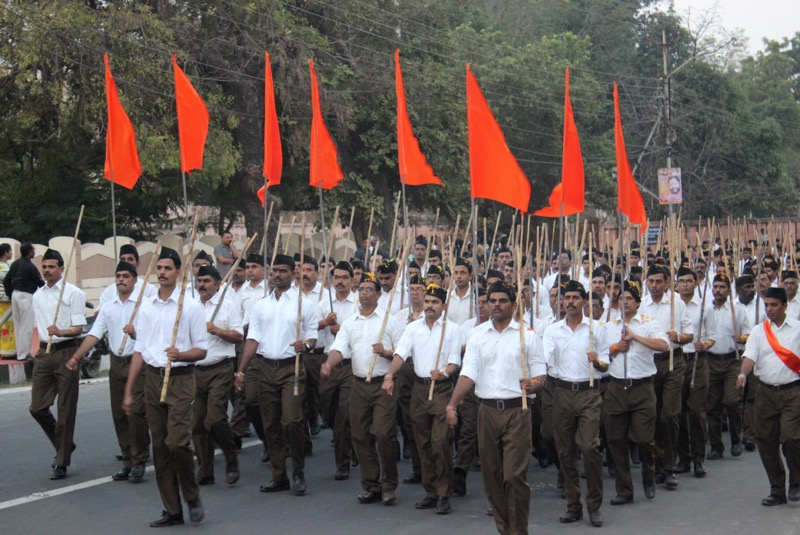
Representational image: Public domain/wikimedia
India’s democracy is at crossroads. The ruling party’s oppressive ideology reveals a strain on the world’s largest democracy.

The evolution of India’s democracy over the past decade is marked by a clash of ideologies, reflecting an ideological struggle between two competing visions for the country’s future. This turbulence, which intensified since the Bharatiya Janata Party (BJP) came to power in 2014, has left the political landscape fraught with contradictions.

India, once a beacon of secularism and pluralism, now finds itself at a critical juncture. The ideas of democracy, secularism, and federalism are increasingly being challenged by a narrow, exclusionary vision that seeks to reshape the nation around Hindu majoritarianism.

The rise of Modi and the BJP, with their majoritarian agenda, has had disturbing consequences on India’s social and political processes. With Modi’s growing popularity, opposition parties find themselves unable to offer a cohesive alternative.

The BJP’s dominance, further cemented in 2019 when it secured an absolute majority, appeared unassailable. However, the 2024 general elections signalled a shift. The Congress Party, led by Rahul Gandhi, revived its fortunes through the Bharat Jodo Yatra, a nationwide rally aimed at reclaiming the political narrative from the BJP.

The creation of the INDIA Alliance, a coalition of opposition parties, and the reduction in the BJP’s parliamentary seats marked a significant change. The BJP, although still the largest party, was forced into a coalition with smaller regional parties, signalling that India’s political system was beginning to fragment in ways it had not in recent years.

Despite this, the BJP and its ideological parent, the Rashtriya Swayamsevak Sangh (RSS), have continued to advance their agenda of cultural nationalism largely unhindered. Their push to provoke India’s Hindu majority through a combination of cultural symbolism, religious rhetoric, and national pride has fundamentally altered the nature of political discourse.

This vision of India, centred on Hindu identity, has created an atmosphere of suspicion and hostility towards religious minorities, particularly Muslims. From parliament to the streets, Muslims have been increasingly vilified by the state and society.

Derogatory remarks by BJP leaders, the demolition of Muslim homes by bulldozers in Uttar Pradesh, and the growing number of cow lynchings are all symptomatic of a rising climate of intolerance. The social fabric, once held together by a belief in pluralism, is now under threat.

This atmosphere of growing intolerance has been compounded by the rise of fringe Hindu nationalist elements within and outside the BJP. Nathuram Godse, Gandhi’s assassin, has been publicly eulogised in some quarters, while Gandhi’s legacy, with its emphasis on secularism and non-violence, is increasingly undermined.

The secular ideals that once defined India’s national identity are being systematically dismantled. In contrast to Gandhi’s inclusive vision, figures like Vinayak Damodar Savarkar, who espoused Hindutva, are now hailed as national icons.

Savarkar’s interpretation of Hindu identity is exclusionary, and his views on India as a “Hindu nation” make little room for Muslims, Christians, Sikhs, and others whose religious and cultural traditions lie outside the Hindu fold. This narrow definition of national identity has become a rallying point for those who wish to turn India into a majoritarian state, fundamentally altering the democratic and secular ethos enshrined in the Constitution.

The BJP’s ideological project extends beyond mere politics; it perversely seeks to reshape history. The party has consistently turned to India’s past, selectively erasing or reinterpreting key historical events to fit its narrative. The Mughal and British periods are misrepresented, while the party seeks to glorify periods of Hindu dominance.

This rewriting of history, which has been facilitated by the rise of social media and digital platforms, is a hallmark of the era of post-truth politics in India. In this digital age, where misinformation can spread rapidly, the BJP’s IT cell has been a powerful tool in distorting facts and manipulating public opinion. Emotive issues, like the construction of the Ram Mandir in Ayodhya, are weaponised to galvanise support, while more pragmatic concerns—such as unemployment, inflation, and climate change—remain sidelined.

This shift in priorities has been accompanied by a marked decline in democratic norms. Under the current regime, political debate has become anemic, and the space for intellectual dissent has been curtailed. Prime Minister Modi, who has yet to hold a press conference during his tenure, prefers to communicate directly with the people through his carefully curated public image, bypassing the traditional mechanisms of accountability.

The parliament, once a vibrant space for debate, has been rendered largely irrelevant. Opposition voices are often silenced, with leaders suspended or excluded from discussions. Even when the opposition manages to voice concerns, they are frequently ignored or dismissed by the government, and the Speaker of the House, far from being neutral, often acts as an ally of the ruling party.

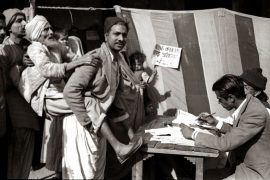
This erosion of democratic norms has extended to the functioning of India’s institutions. The judiciary, long seen as an independent pillar of Indian democracy, now faces growing pressure. The Election Commission’s autonomy, once a beacon of impartiality, is now in question. Accusations of voter-roll manipulation and concerns about the integrity of electronic voting machines (EVMs) have undermined confidence in the electoral process.

In many ways, the BJP has become not just the dominant political force but also the wealthiest and most powerful party in India’s history. Its ability to fund its campaigns through opaque mechanisms such as electoral bonds has enabled it to forge close ties with the corporate world, further consolidating its power. These bonds, which were later declared illegal by the Supreme Court, had already served their purpose: ensuring that the BJP remained firmly entrenched at the centre.

Amid this political and institutional turmoil, the BJP has made notable strides in reshaping India’s physical and economic infrastructure. Initiatives like Swachh Bharat, Make in India, and the construction of new digital networks have sought to modernise the nation’s infrastructure. However, the tangible results of these projects have not seen the light of day, and their long-term impact on poverty alleviation and economic development remains uncertain.

The government’s attempts to boost financial inclusion through schemes like the free ration system have certainly benefited millions, but the persistent challenges of unemployment, inflation, and economic inequality show that India’s developmental goals remain distant.

Yet, despite these challenges, it is clear that India’s democracy is undergoing a fundamental transformation. The ideas that have long defined the nation—secularism, democracy, federalism, and respect for diversity—are under strain. The growing centralisation of power, the politicisation of independent institutions, and the erosion of freedom of thought and expression are all part of a broader shift towards a more authoritarian state.

The BJP’s control over the media and its manipulation of the narrative have left the opposition voiceless, unable to challenge the government’s increasingly dominant narrative. Moreover, the push towards a Hindu majoritarian state has led to an ideological battle that pits those who wish to preserve India’s secular, pluralist ideals against those who seek to establish a more homogeneous, Hindu-centric vision of the nation.

In this context, the question that looms large is whether India is undergoing a phase of interregnum, a period of stalemated power relations between the old and new forces in society. The tussle between the forces of secularism and Hindutva is more than just a political conflict—it is a battle for the very soul of the nation.

As the BJP continues to champion its vision of a Hindu state, it remains to be seen whether the forces represented by the ideals of India’s freedom struggle and its constitution can prevail. Can India’s democracy survive this existential crisis? Or will the country’s future be defined by a new order that seeks to erase the legacy of secularism, pluralism, and democratic governance?

India is changing, but in which direction? The legacy of figures like Gandhi, who championed a secular and inclusive vision of India, is under constant attack. Meanwhile, the ideas of Savarkar’s rabid Hindutva are gaining ground. As history is distorted to suit the ruling party’s political agenda, India’s democracy faces an uncertain future.

The centralisation of power, the erosion of institutional independence, and the growing climate of fear all point to a nation in turmoil. The ideological battle between secular and egalitarian forces on one side and Hindutva forces on the other will shape the future of India. Whether this conflict resolves peacefully or descends into deeper polarization remains to be seen. But one thing is clear: India’s democracy is at a crossroads, and its future hinges on the outcome of this battle of ideas.

-30-

Copyright©Madras Courier, All Rights Reserved. You may share using our article tools. Please don't cut articles from madrascourier.com and redistribute by email, post to the web, mobile phone or social media.
Please send in your feed back and comments to [email protected]

0 replies on “A Democracy At The Crossroads”