The Beatles’ Last Trip to India: Fame, Meditation & The Unravelling Of A Band

Beatles-Madras-Courier
Representational image: Wikimedia/Public domain.
The Beatles did not find lasting peace in India, but they found something more enduring: a body of work that captured uncertainty without resolving it.

In February of 1968, at the height of their fame, the Beatles boarded a plane bound for India. They were the most recognisable faces on the planet, their music saturating radios, bedrooms, and public life, yet they arrived in Rishikesh seeking something stubbornly intangible.

Success had delivered them everything it promised and very little that it could sustain. The world expected spectacle; the four young men wanted silence. What they found instead was a brief, strange interlude—part retreat, part unravelling—that would leave behind some of the most enduring music of the twentieth century and quietly mark the beginning of the end.

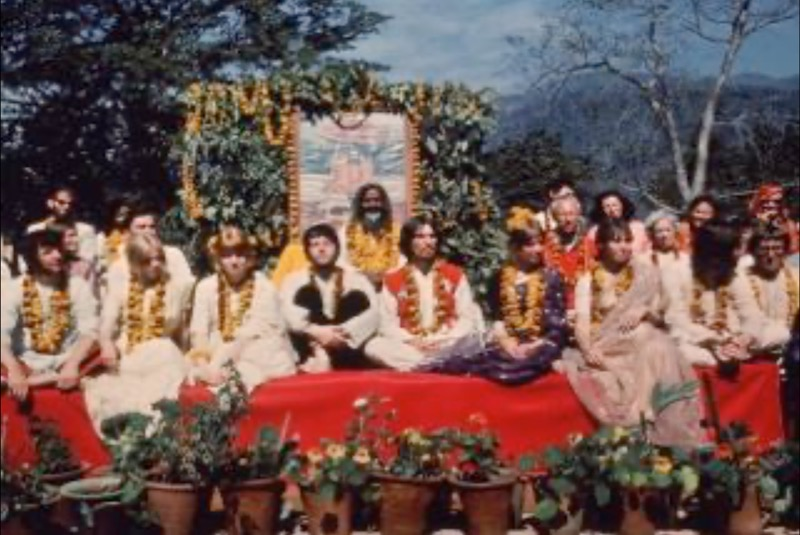
Their destination was an ashram perched above the Ganges, run by Maharishi Mahesh Yogi, whose teachings on transcendental meditation had begun to circulate through Western “counterculture.” India, to the Beatles, existed both as a real place and as a projection—a landscape onto which exhaustion, hope, and dissatisfaction could be mapped.

The Western press followed eagerly, framing the journey as a kind of pilgrimage, though the tone often veered into disbelief. Why, many wondered, would four wealthy, famous young men abandon comfort for austerity, guitars for meditation cushions?

The answer had been forming for years, particularly for George Harrison, whose fascination with Indian music began in 1966 when he purchased a sitar on a whim. That instrument led him to Ravi Shankar, the virtuoso who would become both teacher and spiritual guide.

Through Shankar, Harrison encountered Hindu philosophy not as fashion but as discipline, a structure for thinking about ego, suffering, and impermanence. The influence seeped into the Beatles’ music, inaugurating what critics later called the band’s “sitar phase,” though the phrase often flattened something more earnest into a trend.

The Maharishi entered the Beatles’ orbit in 1967, delivering a lecture at London’s Hilton Hotel. With his flowing hair, beard, and gentle laugh, he cut a figure that oscillated between mystic and caricature to Western eyes. John Lennon was sceptical at first, dismissing him as another “fakir,” yet something in the promise of transcendence—of rising above the noise—proved persuasive. Meditation, the Maharishi suggested, was not retreat but release. It offered a way to exist without being consumed by the machinery of fame.

The timing was cruelly precise. Only months earlier, the Beatles’ manager Brian Epstein had died unexpectedly, leaving behind a vacuum both professional and emotional. Without his stabilising presence, the band drifted, suddenly responsible for themselves in ways they had never been before. When the Maharishi invited them to complete their meditation training in India, the idea felt less like escapism and more like necessity.

They arrived in Rishikesh to a setting far removed from stadiums and screaming crowds. There were no journalists inside the ashram, no schedules enforced by record labels, no demands beyond the discipline of daily meditation. Paul Saltzman, a Canadian photographer who encountered the band by chance, later recalled the atmosphere as one of rare freedom. For perhaps the first time since their rise, the Beatles were alone with their thoughts—and with one another.

What followed was a creative eruption. In the quiet hours between meditation sessions, the band wrote incessantly. Songs poured out of them—some gentle, some fractured, some darkly playful. “Blackbird,” “Dear Prudence,” “While My Guitar Gently Weeps,” and “Happiness Is a Warm Gun” all took shape there, among dozens of others that would form the sprawling, restless White Album. The music bore little resemblance to the spiritual calm they were ostensibly seeking. Instead, it captured contradiction: serenity alongside paranoia, clarity beside fragmentation.

Yet the retreat was never as harmonious as it appeared. Ringo Starr left after less than two weeks, citing his wife’s homesickness and discomfort. Years later, he described the ashram with wry horror, recalling scorpions and tarantulas invading the bath. What had been sold as simplicity felt, to him, like inconvenience dressed up as enlightenment. Paul McCartney lasted longer, nearly a month, but found the routine tedious. Meditation reminded him too much of school, the Maharishi’s solemnity more theatrical than profound.

Only Lennon and Harrison stayed into April, and even then, the cracks were widening. Lennon arrived with his wife, Cynthia, whose hope that the journey might repair their strained marriage quickly dissolved. Lennon grew distant, emotionally absent, slipping away early each morning. Later, it emerged that he was visiting the local post office, waiting for letters from Yoko Ono. India, rather than restoring intimacy, sharpened the clarity of what was already lost.

As spring unfolded, rumours began to circulate—whispers of the Maharishi’s sexual improprieties and financial ambitions. Whether true or not, they shattered the fragile trust that had sustained the retreat. Lennon, already restless and disillusioned, reacted with fury. When asked by the Maharishi why he was leaving, Lennon reportedly replied, “If you’re so cosmic, you’ll know why.” The remark carried the sharpness of betrayal rather than revelation.

The departure was abrupt and bitter. On the journey back to England, Lennon drank heavily and confessed to infidelities that would soon end his marriage. Harrison, more conflicted, lingered in India with Ravi Shankar, unwilling to abandon the spiritual path entirely. Unlike Lennon, he continued to practice transcendental meditation long after the scandal, separating the philosophy from the man who popularised it.

Back in England, Lennon transformed his anger into music. A song initially titled “Maharishi” accused the guru of hypocrisy before being retitled “Sexy Sadie” at Harrison’s urging. It was an exorcism disguised as pop, a reminder that even spiritual disillusionment could be rendered melodic.

The Indian journey would be the last time the Beatles travelled together. At Abbey Road, they worked increasingly in isolation, each occupying separate studios, distrust simmering beneath productivity. When the White Album was released in November 1968, it sounded both triumphant and fractured—a document of abundance without unity. They would make only two more albums together before Paul McCartney announced the band’s breakup in April 1970.

Looking back, Lennon described the dissolution as “slow death,” the inevitable consequence of economic pressure, personal ambition, and emotional exhaustion. India did not cause the end, but it revealed the fault lines already running through the band. It stripped away illusion while amplifying creativity, offering clarity at the cost of cohesion.

The Beatles did not find lasting peace in Rishikesh, but they found something perhaps more enduring: a body of work that captured uncertainty without resolving it. Their Indian interlude remains suspended between myth and memory, a moment when the world’s most famous band stepped briefly outside itself—and returned forever changed.

-30-

Copyright©Madras Courier, All Rights Reserved. You may share using our article tools. Please don't cut articles from madrascourier.com and redistribute by email, post to the web, mobile phone or social media.
Please send in your feed back and comments to [email protected]

0 replies on “The Beatles’ Last Trip to India: Fame, Meditation & The Unravelling Of A Band”