The Great Recession of 2008 was a monumental epoch in global economic history. It demystified the incoherent doctrine of free market economics and market fundamentalism, much like the Fall of Berlin symbolised the demise of fascism and the demolition of the Berlin Wall, marking the decline of communism and the collapse of the Iron Curtain.
With the turn of the twenty-first century, under the guise of free market liberalism, the United States was ensnared by a form of corporate welfarism that exacerbated inequality and entrenched corporate power. Though the US retained the symbols and iconography of democracy, in essence, it has ruefully slipped into an oligarchy.
Neoliberalism and unfettered deregulation became the dominant economic philosophy since the Reagan era. Under the implicit belief in the power of the “invisible hand of markets” and “trickle-down economics,” it aimed to lift all boats and guide society toward resource allocation without state intervention.
However, in the aftermath of the 2008 financial crisis, the US Federal Reserve initiated extraordinary monetary policies, such as Quantitative Easing (QE) and zero lower bound interest rate regimes, to pump liquidity into the system and stimulate demand, thereby kickstarting the faltering economy.
State interventions, such as Quantitative Easing and government bailouts of insolvent financial institutions using taxpayer dollars, discredit the ‘hallowed tenets’ of free market principles, which hold that markets correct themselves. It underscored the indispensability of an active government role in socioeconomic dynamics and discourse.
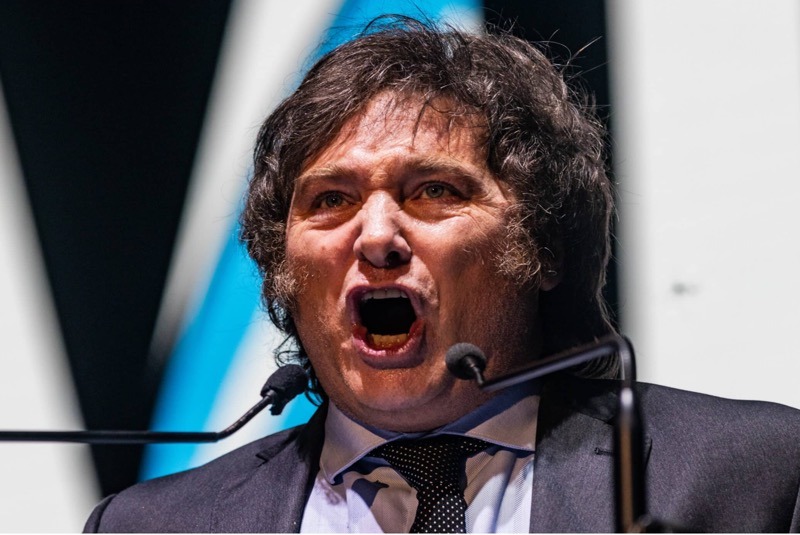
In South America, Javier Milei, an Argentinian radical libertarian and political outsider, emerged from obscurity and rose to prominence in 2023 by upholding the self-same banner of unbridled free market capitalism. Known as “El Loco” (Madman) to his legion of fans, he capitalised on public disillusionment by advocating implementation of an even more extreme version of free market principles.
Milei positioned these reforms as the solution to Argentina’s longstanding economic challenges. He promised that only a radical form of laissez-faire economics could rescue the country from its persistent economic malaise.
In the United States, Free market policies primarily benefited the top 1 per cent, with trickle-down economics failing to reach those beyond the wealthiest 10 per cent, who control two-thirds of U.S. household wealth. This ongoing focus on such economic philosophies has deepened inequality, widened the productivity pay gap, and left median income growth stagnant for over forty years, even after adjusting for inflation.
Argentina was a paragon of economic success in the late 19th century until the 1930s, with a GDP per capita higher than that of France, Germany, and Italy. The nation’s economic prowess was compared to that of industrialising nations, such as Canada, Australia, and the US. This prosperity was spearheaded by agricultural exports, such as wheat, soybeans, and beef, raised in the steppes and grasslands of the Pampas.
An extensive network of rail infrastructure connecting the rural heartlands and urban centres to the ports was built, funded by British capital. A wave of Immigrants arrived in this new “El Dorado,” and between 1870 and 1930, Argentina received more than 6 million transatlantic immigrants, primarily European.
They created a vibrant and cosmopolitan society with a burgeoning middle class. Buenos Aires dazzled under the epithet, “The Paris of South America” — a beacon of exquisite culture, architectural marvels, and timeless charm.
Many political pundits argue that Argentina’s decline began with Juan Peron’s presidency (1946–1955), but reality is far more complex. Peron’s socioeconomic and political movement, “Peronism,” significantly altered the country’s future.
After the Great Depression, Argentina pursued industrialisation and self-sufficiency through nationalist policies, as exports declined due to its trading partners’ protectionist policies. Influenced by Mussolini’s economic nationalism — though not his fascist ideology — Peron implemented “statism” as the paradigm for growth, import substitution, and high tariffs to protect emerging industries.
Peron nationalised major sectors of Argentina’s economy, including banks, utilities, railways, airlines, ports, and telecommunications — mainly those owned by British and American interests. This resulted in the establishment of strong state monopolies, which significantly altered the economic landscape.
His government, aiming to build a strong welfare state, introduced Keynesian-inspired policies that expanded workers’ rights, promoted social equity and distributive justice. Key reforms included paid vacations, women’s suffrage, legalised abortion, free university education, child allowances for low-income families, and affirmative action for marginalised groups, all designed to provide greater protection for vulnerable citizens.
“Peronism” led to large government spending and persistent fiscal deficits, financed by printing money, further fueling inflation. For example, while European consumers spent approximately $40 per month on electricity, Argentinians paid just $5, resulting in a cost to the government of $12.5 billion in 2022, equivalent to 2 per cent of GDP.
Frequent political upheavals — from coups to shifts between Peronists and right-wingers — disregarded the singular critical element of polity to retain global confidence and stabilise the economy. It was a continuation of economic policies.
Both left and right-wing parties overturned previous policies upon taking office. Economic instability intensified as the Argentine Peso rapidly lost value, triggering hyperinflation, debt defaults, triple-digit inflation, bank runs, fluctuating exchange rates, and a booming black market for US dollars.
Black-market brokers worked with financial institutions to negotiate rates, with tacit approval from banks and exchanges. As the Peso became increasingly unpredictable, the US dollar became the preferred currency for saving and trading.
Economic isolationism, bloated bureaucracy, and economic mismanagement imperilled Argentina’s prosperity. Furthermore, it has failed to develop world-class domestic industries that can compete on a global scale, similar to those in the US, Canada, and Australia. These countries also embarked on industrialisation through protectionism, but have created globally benchmarked sectors and corporations. It was this economic mess and financial storm that Javier Milei inherited.
Milei denounced Keynesian economics and the model welfare state adopted globally, especially in Europe. He found intellectual and philosophical mentors in Frederick Hayek and Milton Friedman, who were widely regarded as the high priests of neoliberalism and anti-Keynesianism.
Instead, he was influenced by the American political thinker Murray Rothbard, who had coined the terms “Anarcho-capitalism” and “Paleo libertarianism,” which he developed with Llewellyn Rockwell. Milei self-identified as an “anarchocapitalist” and adopted the ideals, accentuated by an extreme right-wing ideology.
Following Rothbard’s principles, Milei proposed sweeping economic and social reforms. His main goals included abolishing Argentina’s central bank, reducing the state’s involvement in the economy, cutting subsidies, dollarising the economy, and promoting mass privatisation and deregulation.
He also supported controversial policies such as legalising organ trade, repealing abortion laws, opposing feminism and cultural Marxism, and encouraging civilian gun ownership. He claimed sex education was a Marxist conspiracy to undermine the social institution of family.
His economic revival policies closely mirror the IMF’s “Washington Consensus” structural adjustment programs. These measures have generally harmed labour markets in Africa, Asia, and Latin America. They weakened collective bargaining, enforced austerity that limits welfare spending, encouraged deregulation and privatisation that allow foreign corporations to take over local businesses, and forced currency devaluation that reduces purchasing power and increases inflation though it boosts exports in the short term.
After taking office in 2023, Milei implemented draconian austerity measures by cutting fiscal and social spending and closing 200 government offices. He reduced the government budget by 30 per cent, dismissed 30,000 employees, and consolidated ministries from 18 to 9, including the elimination of the education, science, transportation, employment, environment, women’s, and tourism ministries. The cuts were particularly deep in infrastructure (-74 per cent), healthcare (-28 per cent), education (-52 per cent), social development (-60 per cent), and provincial assistance (-68 per cent). He even abolished 13 social programs on ideological grounds.
Ironically, his administration has ramped up spending on the State Intelligence Secretariat (SIDE), with funding growing at a staggering 216 per cent amidst widespread poverty, unemployment and economic misery. Furthermore, his government has spent approximately $350 million on the purchase of fighter planes, while simultaneously advocating for austerity and fiscal discipline.
The Argentine stock market has been buoyant since Milei took over, reaching its peak in January 2025, until a pump-and-dump crypto scandal rocked the nation in February 2025. Financial schemes, such as “Bicicleta Financiera” (financial bicycle), which is a carry trade, have helped wealthy investors reap windfall profits of 50per cent by taking advantage of the crawling peg—a progressive devaluation of the Peso at 2 per cent every month. Investors could invest in peso-denominated financial instruments and, by virtue of predictable devaluation, could convert their investments into dollars at substantial capital gains.
Despite these gains in the financial markets, the real economy is in doldrums. The construction industry, for example, has contracted by 21 per cent since Milei took office, resulting in the loss of more than 73,000 jobs. Other industries have similarly faced steep declines, with the retail, footwear, and clothing sectors experiencing significant job losses due to a slowing in consumer demand. In the textile sector alone, 300 companies have shut down, resulting in the loss of over 12,000 jobs.
Across all sectors, the cumulative loss amounts to approximately 200,000 – 250,000 formal jobs. In construction and manufacturing, the situation is equally dire, with around 18,000 businesses closing their doors since the onset of Milei’s reforms.
Unemployment levels could be significantly higher, considering that 43.2 per cent of Argentina’s workforce is employed in the informal sector. A disquieting pattern is emerging that suggests whether Milei is de-industrialising Argentina, reminiscent of the United States, to focus on the financialisation of the economy.
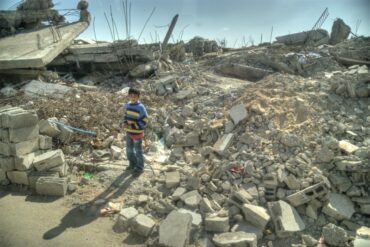
Javier Milei’s austerity program, unequivocally declared with the phrase “no hay plata” (“there is no money”), has led to a severe economic downturn in Argentina. In his first six months, poverty rose to 53 per cent before dropping to 31.6 per cent in 2025, but extreme poverty still affects about 8.2 per cent of Argentinians. Major cutbacks in social welfare, including soup kitchens, utility subsidies, and pensions, have significantly increased hardship for vulnerable groups.
Western media outlets and proponents of free-market economics have praised Milei for reducing inflation from 211 per cent at the start of his administration to a projected 41.3 per cent in 2025. However, this ostensible victory masks a more troubling reality.
The decline in inflation figures has coincided with a decrease in purchasing power, falling wages, diminished income, and depressed consumption among ordinary citizens. The reduction in inflation does not equate to improved living standards for most Argentinians. It is disconcerting that the poor and the marginalised have to bear the consequences of economic “shock therapy” and “chainsaw cuts,” creating a hierarchy of human lives and values.
His track record in environmentalism is dismal, as he is a notorious climate change denier, denouncing it as a “Marxist lie.” He is proposing sweeping reforms for deforestation to aid extractive industries that will result in alarming degradation of forests and glaciers, loss of habitat of Atacama and Kolla Indigenous communities, the destruction of salt flats and contamination of water resources.
It is estimated that to extract one ton of Lithium, two million litres of water need to be evaporated. Solicited by Javier Milei, more than 30 mining companies have encroached Argentina’s ecologically vulnerable regions.
Political analysts have varying opinions on Javier Milei’s victory in the midterm elections, especially after his party, La Libertad Avanza, suffered a significant defeat in the Buenos Aires municipal elections in September. Most believe Milei’s success stems from the Argentine public’s disillusionment with the economic ills of Peronism.
However, some credit the victory to freewheeling American intervention, particularly actions by US President Donald Trump, who allegedly pressured the Argentine electorate by threatening to revoke a $20 billion swap line between the US Treasury and Argentina’s Central Bank—a liquidity measure meant to prop up a weakening Peso artificially. Donald Trump aims to end the U.S.’s benign neglect of Latin America, and, for geopolitical reasons, is seeking populist allies globally.
The prognosis of a successful turnaround of the economy through Javier Milei’s avant-garde policies is premature, given the populists’ chequered history of crashing economies. But his indifference to the poor and marginalised is explicit and flagrant.
The people of Argentina deserve a better life to reclaim their days of economic prosperity and a coveted society. Over the course of the century, economic malfeasance has evolved into an existential crisis. Populists around the world have turned their gaze to Argentina to see the results of Milei’s prescriptive mix of free-market liberalism and right-wing radicalism.
The Chinese model of “socialism with Chinese characteristics” or the Scandinavian hybrid model of capitalism for growth and socialism for redistribution may also merit consideration. The abominable part is disowning the poor and underprivileged of Argentina in the name of austerity and “short-term pain,” which often relapses into economic hysteresis. It is a moral and economic disaster.
Fyodor Dostoyevsky’s iconoclastic character Ivan in The Brothers Karamazov summarises this moral and ethical predicament when he emphatically states that the suffering of the world, especially the robbing of innocent children of their present, cannot be justified by a future good or an “eternal harmony.”
-30-
Copyright©Madras Courier, All Rights Reserved. You may share using our article tools. Please don't cut articles from madrascourier.com and redistribute by email, post to the web, mobile phone or social media.Please send in your feed back and comments to [email protected]