Women’s empowerment is the most popular slogan of every political party in India. Through relentless propaganda machinery, we are constantly told that women are at the centre of India’s development story and that policies are formulated for their health, education, safety, employment, and so on. Indeed, a small minority of women occupy high places. The President of India, the Finance Minister, CEOs, and scientists are held up as examples of how far India has come. But behind these tall claims lies a complicated reality.
Did empowerment trickle down to women in rural India? Or is empowerment yet another big word that conceals the grim reality of inequality?
On paper, India’s plethora of constitutional and policy mechanisms seem very progressive. Right at the outset, the founders of the Constitution outlawed gender discrimination and proclaimed equality before law.
Over the years, the State introduced laws on domestic violence, sexual harassment, dowry, and child marriage to protect women. On paper, it appears that every part of a woman’s life is supported through welfare schemes—from Beti Bachao Beti Padhao and Poshan Abhiyaan to Ujjwala Yojana and Jan Dhan Yojana.
Collectives of women – especially Self Help Groups (SHGs) – formed under the National Rural Livelihood Mission, have mobilised over ninety million women into entrepreneurship and micro-finance networks. The one-third reservation of seats for women in panchayats has brought millions into political life and given them a formal say in local governance. And at the national level, when implemented, the Women’s Reservation Act is likely to change the face of parliamentary representation.
These achievements have provided visibility, some voice, and access to resources to women in ways denied to previous generations. However, visibility is not power. The presence of a few women in positions of authority does not, on its own, change a social order based on patriarchy, caste hierarchy, and economic dependency.
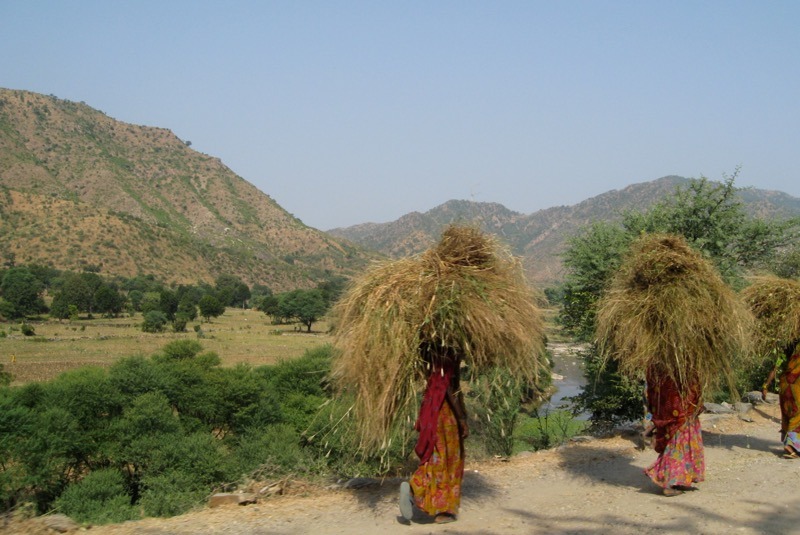
In India’s villages, where approximately 65 per cent of women live, empowerment is essentially a matter of rhetoric. Despite India’s economic growth—primarily indicated through macro-economic indicators—only one-quarter of rural women participate in the labour force; most are unpaid/informal workers. Women perform nearly half of agricultural labour but own less than 13 per cent of agricultural land.
Even access to credit is mediated through men, though women may have their names on paper in Self Help Groups. However, the reality is that husbands or sons often make decisions.
Education—an empowerment tool—tells a similar story. Female literacy in rural India is around 67 per cent, with girls dropping out consistently after puberty. Whether from early marriage, household chores, or safety concerns, women’s aspirations are cut short, long before they even arrive at college. Even if women study, their employability is low in rural areas. This is not only due to the lack of vocational training, but also because of the persistence of gender biases in hiring in rural areas.
Health indicators are worrying. More than 50 per cent of rural women are anaemic; while maternal mortality is declining, it is still high. Access to reproductive health, including menstrual hygiene, is uneven, further privileging men’s health over women’s health. In rural areas – particularly in Uttar Pradesh, Bihar, Madhya Pradesh, Rajasthan, Gujarat and Chhattisgarh – childbirth is still attended by untrained individuals rather than doctors, and health decisions are frequently made by men in the family.
Political representation is often hollow. Although women fill one-third of all panchayat seats, “proxy politics” is a common phenomenon — where men take absolute authority behind the scenes, as fathers or husbands. Many sarpanches (women elected leaders) sign things that they did not create or attend meetings over which they do not have control. Especially in the rural heartland, absolute authority continues to be male.
Funds and quotas can be established through policies, but they cannot dismantle hundreds of years of patriarchy. In rural areas of the “Hindi heartland,” women’s autonomy remains bound by caste codes, religious conservatism, and social shaming. Movement outside the home is restricted; speaking is immodest; and sexual violence is both routine and unreported.
When women go out — as ASHA workers, Anganwadi helpers, or self-help group leaders — they encounter new kinds of vulnerability: delayed funding, no safety, disrespect from officials. Empowerment has often meant doing much more work for less or no pay. It is easy to glorify the notion of the “empowered Indian woman” in television advertisements—one hand holding a laptop and the other a rolling pin—but, for the rural population, this is an illusion. There is a significant difference between aspiration and reality.
Empowerment in India reflects a trickle-down model, in which the bulk of benefits have gone to educated, urban, middle-class women in cities. But many women in rural India continue to live in desperate poverty; many even work as unpaid labour. The government needs to stop measuring empowerment by the number of women CEOs in Mumbai when women in rural areas are still carrying water for miles, experiencing malnutrition, and having no voice in decisions that affect their families.
Real empowerment will remain a mirage unless the structures of power are changed. Granting ownership of land and productive assets, universal access to quality education—not just literacy—that’s gender sensitive, reformed panchayats that would allow women to make real decisions and control budgets and, most importantly, a readiness to accept women as experts are some of the measures that can bring about changes in the power structures.
India’s story of women’s empowerment is, therefore, inspiring and incomplete. While it has lifted millions of women out of poverty, it has left millions untouched. It has created leaders at the top but has not yet fortified the foundation at the bottom.
-30-
Copyright©Madras Courier, All Rights Reserved. You may share using our article tools. Please don't cut articles from madrascourier.com and redistribute by email, post to the web, mobile phone or social media.Please send in your feed back and comments to [email protected]