From The World’s Largest Democracy To An Electoral Autocracy: The Steady Erosion of India’s Democratic Foundations

Electoral_Autorcracy_Madras-Courier
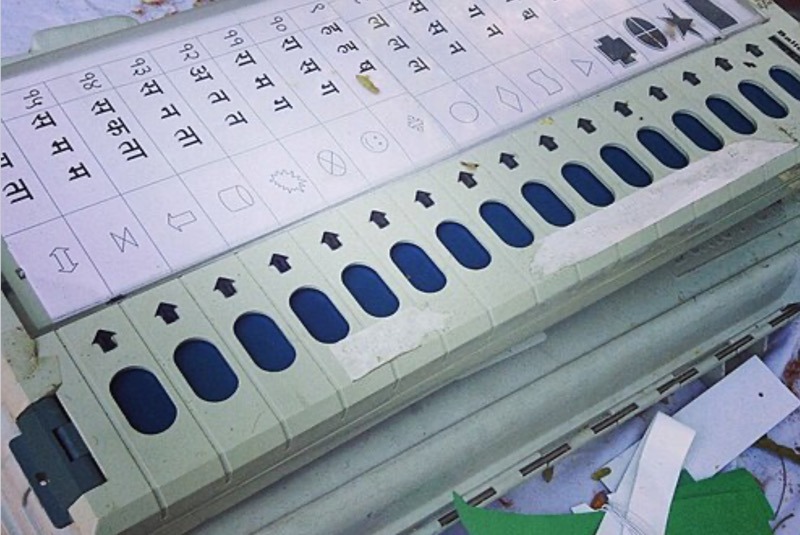
Representational Image: Public domain/Wikimedia.
India’s decline from a thriving democracy to an "electoral autocracy" signals the weakening of democratic values.

Indians take pride in being citizens of the world’s largest democracy. Yet, behind this proud self-image lies a troubling erosion of democratic values. According to the 2024 V-Dem report, India’s Liberal Democracy Index has slumped from 0.58 in 2000 to 0.29 in 2024—cut almost in half. The index, which measures the democratic health of countries, suggests that India’s democratic foundations have been steadily weakening over more than two decades.

This decline is not confined to a single metric. Core components of democratic health have deteriorated across the board. For example, civic society engagement and electoral participation, as measured by the Participation Index, have fallen from 0.79 to 0.5 between 2000 and 2023. The Representation Index—reflecting credible elections, free and competitive political parties, and legislative effectiveness—has also slipped from 0.72 to 0.5. Civil liberties have seen a similar decline, with scores dropping from 0.65 to 0.5. These figures reflect a system becoming less inclusive, less accountable, and increasingly vulnerable to executive overreach.

One of the most visible symptoms of this gradual democratic weakening is the shrinking independence of Indian media. Indian media has been reeling under immense pressure as government censorship efforts have nearly doubled from 0.94 to 1.9 in the last 25 years. At the same time, media bias—particularly against opposition parties—has quadrupled, now standing at 1.61, up from 0.40 in 2000. These developments raise concerns not only about press freedom but also about how public opinion is shaped in the world’s largest democracy.

The concerning trends of the broader political environment have further strained democratic values. India shows rising political polarisation and an alarming spread of disinformation and hate speech. V-Dem’s Polarisation Index shows a steep rise from 2.11 to 3.75, reflecting a polity fractured along ideological lines. Meanwhile, government disinformation has surged from 1.29 to 2.76, and political parties’ hate speech from 1.92 to 3.34. These trends have deepened divisions in Indian society, as citizens are drawn into antagonistic political camps. Together, they correlate with the drop in the Liberal Democracy Index and signal structural damage to democratic discourse.

Even India’s political institutions, particularly the judiciary—long regarded as a bulwark of constitutional democracy—have not been immune. The Judicial Independence Index declined from 0.63 to 0.54 between 2000 and 2023, while government attacks on the judiciary rose from 0.34 to 0.93. This shows that the judiciary’s work is mostly under pressure from the government, as its autonomy and independence are also receding. This raises a serious question about the institution’s ability to act as a check on executive power and its ability to withstand the democratic rollback of the country.

The democratic decline in India is a gradual but real phenomenon. The 2024 V-Dem report classifies India as an “electoral autocracy”—a category that includes countries with regular elections but weakened liberal-democratic safeguards. While this classification has sparked debate, it highlights the urgent need to reflect on the long-term consequences of the ongoing erosion of democratic norms. Genesis and propagation of disinformation and hate speech might have short-term electoral perks for government/political parties in terms of winning elections. But, over time, they risk undermining the very system that makes electoral competition meaningful.

The cumulative effect of these forces is not a dramatic collapse but a slow, structural decay. If efforts are not made to reverse the trajectory, democratic backsliding may soon become irreversible. As India prepares for upcoming electoral cycles, there is an urgent need to pause and reflect. Can a democracy flourish when its institutions are hollowed out? Can elections alone sustain a democratic spirit if voters are misled, dissent is suppressed, and institutions are compromised? These are not just rhetorical questions; they are the challenges of our times. The way forward lies not in alarmism, but in democratic renewal.

-30-

Copyright©Madras Courier, All Rights Reserved. You may share using our article tools. Please don't cut articles from madrascourier.com and redistribute by email, post to the web, mobile phone or social media.
Please send in your feed back and comments to [email protected]

0 replies on “From The World’s Largest Democracy To An Electoral Autocracy: The Steady Erosion of India’s Democratic Foundations”