In the early 1500s, as the Mughal Empire expanded its dominion across the subcontinent, a new and persistent force from the seas began to assert itself in the Indian Ocean. The Portuguese, though officially crusading merchants of empire, were anything but. Pirates in all but name, they seized and controlled the great waterways, their ships predatory and relentless. One of the most audaciously defiant of their many incursions occurred on the western coast of India, in a place that would become notorious as the stronghold of these maritime marauders: Tangasseri.
The Portuguese, having established a powerful presence along India’s shores, were more than just traders; they were enforcers of a kind of imperial piracy. Determined to maintain their monopoly over the sea routes, they ruthlessly barred the Mughal Empire from entering the waters of the Arabian Sea. They seized the ships of the Mughal nobility, despite having granted them passes to allow safe passage.
One particularly glaring instance occurred in 1614, when Maryam Zamini, the mother of the Mughal emperor Jahangir, was detained by the Portuguese while attempting to sail from Surat. Though she was a figure of great nobility and influence, the Portuguese insisted on the necessity of a pass for anyone seeking to traverse their controlled waters and seized her ship. That even a royal such as Zamini could be detained in this way speaks volumes about the nuisance the Portuguese pirates had become at the time.
Their boldness and assertion of control over the sea routes were not merely a matter of piracy; it was part of a broader strategy. The Portuguese saw their role not only as trade monopolists but as protectors of a particular set of interests. They favoured Hindu and Christian merchants over their Muslim counterparts, especially the Mappila Muslims of Kerala, whose dominance of the Indian Ocean trade posed a serious threat to Portuguese ambitions.
The Mappilas controlled vast networks of trade routes, and the Portuguese sought to break this monopoly by any means necessary. And so, when Muslim pilgrims attempted to cross the seas to reach Mecca, the Portuguese made it a policy to stop them. The message was clear: only those who aligned with Portuguese interests would be permitted to pass.
However, this strategy was not just about trade—it was also about religion. The Portuguese missionaries who had arrived in the region began converting large numbers of lower-caste Hindus, but more controversially, they also converted Muslims.
The conversions were not always voluntary. It is said that the Portuguese sought to weaken the Mappila Muslims by drawing them away from their faith, thus eroding their influence in the region. While many saw this as an act of religious persecution, others viewed it as a calculated move in the broader contest for control of the seas.
By reducing the power of the Mappilas, the Portuguese hoped to consolidate their own dominance. Whether by force or persuasion, the conversions reinforced Portuguese power in the region, ensuring that those who had once posed a threat to their trade routes would now be subjugated.
Amidst this turmoil, the Portuguese pirates began to settle along the coast, particularly in Kollam, a city that would play a central role in their operations. In 1519, they invaded Kollam and quickly made it their base of operations. The area that came to be known as Tangasseri, just south of Kollam, became the focal point of their piracy.
It was here that they established a cemetery—an eerie symbol of the permanence they sought on the Indian Ocean. For nearly half a century, the Portuguese established Tangasseri as their base, from which they could launch raids on passing ships, disrupt Mughal trade, and assert their dominance in the region.
Yet, as the years passed, the Portuguese grip on the region began to loosen. The Mughal Empire, which had long been frustrated by the Portuguese interference, eventually sought to counter their dominance. However, the Mughals faced a major obstacle: their navy was weak, and they had little experience in naval warfare.
Under the reign of Emperor Aurangzeb, this problem became particularly apparent. By the time Aurangzeb ascended the throne in the mid-seventeenth century, the Mughal Empire had been in decline for decades, and its naval power had deteriorated significantly.
To counter the Portuguese pirates, Aurangzeb turned to an unlikely ally: a man named Yakut Khan, a Siddi of African descent, to lead a naval force capable of challenging the Portuguese. The Mughals were finally forced to confront the pirates on their own terms—by outsourcing their naval strength to a trusted general who could lead them on the seas.
Despite the Mughals’ growing resistance, the Portuguese pirates continued to operate in their coastal stronghold. The city of Kollam flourished under Portuguese rule, but not all its citizens shared in the prosperity. The Portuguese brought schools and education to the city, but they did so with a clear bias: the Muslim population of the region was largely excluded from these advancements.
The Muslims of Kerala were pushed to the margins, economically and socially disadvantaged in a society that favoured their Christian and Hindu counterparts. While the Portuguese consolidated their power, they viewed the local Muslims as a hindrance to Portuguese interests, and their exclusion from the educational and economic systems created a lasting divide that would have far-reaching repercussions.
For the Portuguese, the activities they engaged in might not have seemed particularly criminal. To them, they were fulfilling their imperial mandate, securing their interests, and controlling the seas. But to the Mughal Empire and to the local populations who suffered under their rule, the Portuguese were little more than pirates.
They plundered ships, seized cargo, and imposed their will on anyone who dared to cross their path. The term “firangi” became a common epithet among the subjects of the Mughal Empire, referring to foreign invaders who preyed on their ships and trade routes. It was a name that encapsulated the deep resentment the Portuguese pirates generated, not just among the Mughals, but also among the communities whose way of life they sought to control.
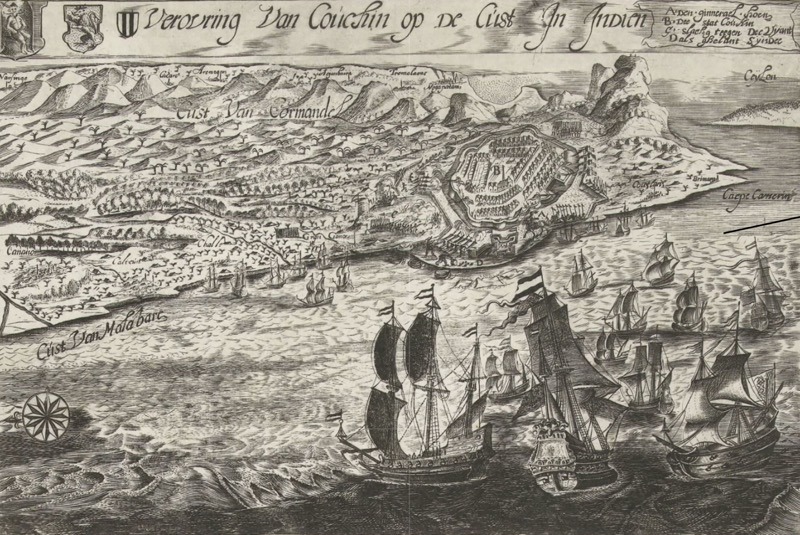
By the seventeenth century, when the Dutch gained prominence and began to challenge Portuguese hegemony, the pirates of Tangasseri had already begun to decline. The Portuguese, who had once dominated the seas, were gradually ousted from their stronghold.
The Dutch, in turn, established their own bases along the Indian Ocean, and later, the British would take control of the region. But for nearly half a century, the pirates of Tangasseri had held the seas with an iron grip, and their legacy lived on in the city they had made their home.
The question of whether the Portuguese were pirates or imperialists remains open to interpretation. To the Portuguese, they were doing what was necessary to maintain control over the sea routes that were the lifeblood of their empire.
To the Mughals and the Muslims of the region, however, the Portuguese were no different from the pirates who had terrorised the seas for centuries. They were invaders, looters, and thieves, their empire built on the exploitation of those they deemed inferior.
Whether in the name of empire or religion, the pirates of Tangasseri were a force that would not be easily forgotten—by the Mughals, the Muslims, or the history of the Indian Ocean itself.
-30-
Copyright©Madras Courier, All Rights Reserved. You may share using our article tools. Please don't cut articles from madrascourier.com and redistribute by email, post to the web, mobile phone or social media.Please send in your feed back and comments to [email protected]