The Fatel Razack: A Voyage Of Promise, Betrayal & The Birth Of Indenture In Trinidad

Fatel-Razack-madras-courier
Fatel Razack’s journey marked the beginning of a long and painful history of indentured labour. It also serves as a testament to the resilience of the people who endured it.

In 1845, a small, ageing ship named the Fatel Razack set sail from the port of Calcutta, its hull filled with 231 passengers—Indian men, women, and children—bound for the sugar plantations of Trinidad. These passengers were the first of over 140,000 Indians who would be shipped across the oceans under the British system of indentured labour, a system designed to replace the labour force lost with the abolition of slavery in the colonies.

They were promised wages, land ownership, and the opportunity to return to India at the end of their contracts. For many, the journey began with dreams of a new life—a chance for growth and prosperity in a foreign land. But as the Fatel Razack departed, bound for distant shores, the promises of opportunity would begin to unravel, and the passengers would soon realise that they had been sold a lie.

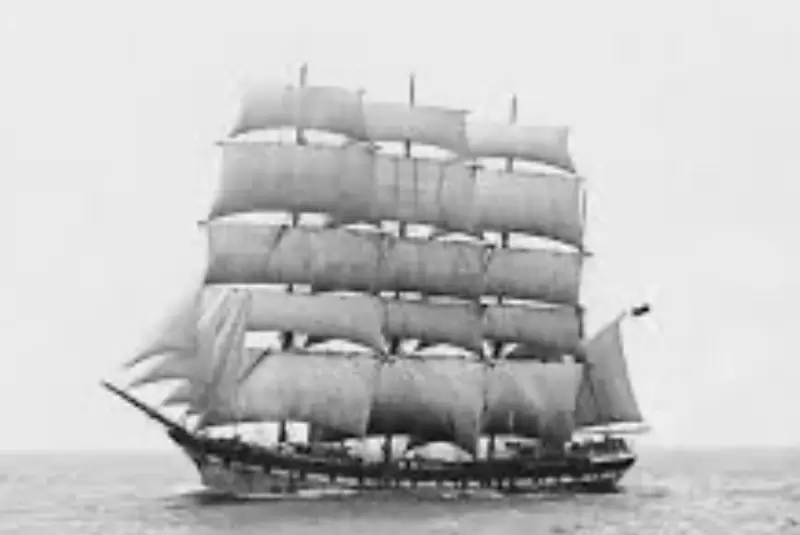
The ship itself, ill-suited for the voyage ahead, was a relic from an earlier time. Built in 1845, it had been originally commissioned by a wealthy Bombay merchant and named Cecrops before being rechristened by its new owner, Ibrahim bin Youssef.

At just 415 tons, the Fatel Razack was too small to comfortably carry the passengers it was tasked with transporting across two oceans. The cramped conditions onboard would prove to be only the beginning of a much larger ordeal. While the journey was expected to last only a few weeks, it stretched on for ninety excruciating days, during which the passengers were forced into close quarters with one another, their hopes of a bright future dashed by the unrelenting hardships of the sea.

Among the passengers was a young man named Bharat, the first name on the ship’s register. At just 20 years old, Bharat was eager to begin his new life in Trinidad, one of the first of many who would follow him in the years to come. But from the moment the ship set sail, the reality of his situation became clear. The Fatel Razack was not built for comfort, and its passengers were far from home, thrust into an unfamiliar world that demanded they quickly adapt to their new, dehumanised roles.

The cramped, poorly ventilated quarters provided little respite from the harsh journey. For 41 days, the ship battled violent seas, icy winds, and treacherous weather as it made its way out of the Bay of Bengal and into the Indian Ocean. The space on board was so confined that the passengers had no choice but to remain in close proximity, their bodies pressed together in ways that were unfamiliar and uncomfortable.

The men, women, and children were segregated, with the women sent to the back of the ship, the men taking the forward areas, and the families housed in the middle. Socialising across these boundaries was forbidden, and the rigid divisions onboard mirrored those that had defined Indian society for centuries.

The caste system, deeply ingrained in Indian society, was also transported aboard the Fatel Razack. The passengers were not merely divided by gender and social groups but also by caste. Those assigned to the most menial tasks, such as cleaning and sweeping, were from the lowest castes, while the cooks, responsible for preparing food for the entire ship, were drawn from the highest.

The system of hierarchy extended to the uniforms they were required to wear and the identification tags they were given, each person marked by a metal disk or armband as though they were mere commodities. The rigid structure aboard the ship ensured that every individual knew their place, reinforcing the control that the British officers maintained over the passengers. But the worst was yet to come.

As the Fatel Razack made its way through the Indian Ocean, conditions deteriorated. The once hopeful passengers, many of whom had been promised a new start, found themselves fighting not only the violent seas but also the onset of disease. Cholera, typhoid, and dysentery spread quickly among the passengers, who were forced to suffer in silence.

The officers dismissed any complaints of illness, attributing their suffering to the supposed ‘healing power’ of the sea breeze. With no access to proper medical care, the passengers were left to endure their suffering without relief. The cramped conditions, combined with poor nutrition, made the journey unbearable.

The desperate began to throw themselves overboard, unable to cope with the growing misery. By the time the Fatel Razack reached the port of Spain in Trinidad on May 30, many of the passengers had already died, their bodies consigned to the ocean’s depths.

When the ship finally arrived, there was no celebration, no one to welcome the exhausted travellers. Instead, the passengers were met by a health officer, a harbour master, and the newly appointed Agent-General of Immigrants, whose sole concern was ensuring that the labourers were fit to begin work on the sugar estates the very next day.

The survivors, many of them weak from illness and malnutrition, were pronounced in “good order and condition,” a callous assessment of their physical state that ignored the toll the journey had taken on their bodies and spirits. It was a grim beginning to what would become a life of exploitation and abuse.

The arrival of the indentured labourers was hailed as a solution to the labour crisis in the colony, as the crop season in Trinidad was coming to an end and plantation owners were eager to replace the labour force lost after the abolition of slavery. The Indian labourers, considered saviours of the colony’s economy, were expected to toil in the sugar fields for a pittance and work long hours under the harshest conditions.

But for the passengers of the Fatel Razack, their arrival marked the beginning of a long and painful chapter in their lives. The promises of wages, land, and a return to India were nothing more than empty words. Instead, they found themselves trapped in a system that valued their labour but offered little in return.

Once on the plantations, the indentured labourers were subjected to inhumane conditions. They were housed in overcrowded, unsanitary quarters, given little food, and forced to work long hours in the sugar fields. Their contracts bound them to the plantations, and while they were technically free after their term of service, most found themselves unable to leave due to debt and the lack of opportunities.

Their lives were controlled by the same system of exploitation that had shaped their journey aboard the Fatel Razack. They were paid in scrip that could only be redeemed at company-owned stores, ensuring that the plantation owners had a stranglehold on their labour.

Despite the gruelling conditions, the indentured labourers endured their hardships silently, knowing that the system they entered was designed to break them. The Fatel Razack was just one of many ships that would transport Indians to the British colonies. The same broken promises and unfulfilled dreams marked each journey. Passengers like Bharat, who arrived with hope in their hearts, found that their new lives would be defined not by freedom and opportunity but by hardship, abuse, and systemic inequality.

The story of the Fatel Razack and its passengers is a painful reminder of the costs of empire and the exploitation that underpinned the British colonial system. Though the indentured labourers were not slaves, their lives were shaped by a system that treated them as little more than tools to be used and discarded.

They were denied basic human dignity, subjected to prejudice and abuse, and left to toil in the fields with no hope of ever truly escaping their circumstances. While the Fatel Razack’s journey marked the beginning of a long and painful history of indentured labour, it also serves as a testament to the resilience of the people who endured it.

For every passenger like Bharat, there were thousands more who followed in his footsteps, their lives shaped by a system that sought to exploit them for profit. Their story, long ignored by history, is a vital part of the colonial legacy—one that must be remembered and understood if we are to truly grasp the depth of the suffering that took place during the era of indenture.

-30-

Copyright©Madras Courier, All Rights Reserved. You may share using our article tools. Please don't cut articles from madrascourier.com and redistribute by email, post to the web, mobile phone or social media.
Please send in your feed back and comments to [email protected]

0 replies on “The Fatel Razack: A Voyage Of Promise, Betrayal & The Birth Of Indenture In Trinidad”